

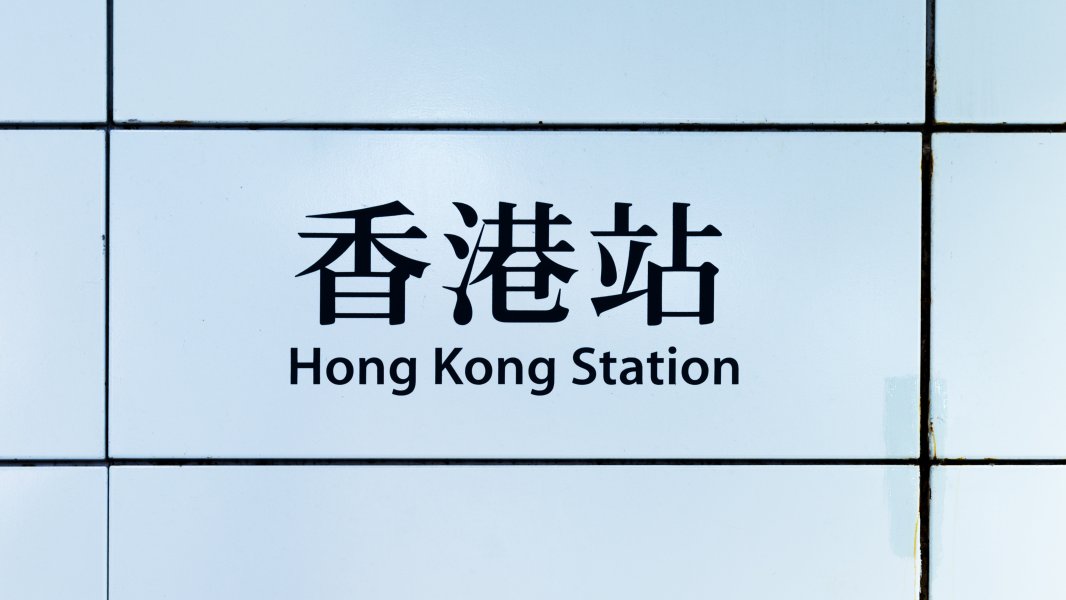
Everyone who has spent enough time in Hong Kong has an MTR station they remember by feeling.
Not by the map, not by the exits, not by the colour of the line, but by something less precise: the way the air changes when the doors open, the density of the crowd, the kind of footsteps around them, the shops nearby, the escalator that always feels too long, the corridor that somehow leads to the right place even when one cannot fully explain how.
Hong Kong is a city that teaches people to navigate quickly. Street names matter, of course, but stations matter more. They are not merely stops along a railway line. They are entrances into different temperaments of the city. Each station has its own pace, its own sound, its own pressure. Some feel like arrival. Some feel like escape. Some are so crowded that they seem less like stations than underground weather systems.
For me, Hong Kong and Central have always belonged together in memory, even though technically they are distinct stations connected by long underground passages. I think of them as one large, breathing organism beneath the city’s financial heart. Above ground, Central can be difficult to read. The buildings rise with authority, streets bend into slopes, footbridges lead from tower to tower, and one can easily become disorientated among glass façades, marble lobbies, private clubs, office towers and shopping arcades. But underground, strangely, I often found the city easier to understand.
If I ever felt lost in Central, my instinct was to go below.
There was comfort in that. The station gave the district a hidden order. It connected the city’s corporate face through tunnels, signs, exits and moving crowds. It was possible to pass from the MTR to IFC, from one polished passage to another, from transport to commerce to coffee to harbour air, all without fully surrendering oneself to the confusion of the streets above. Central was not only a business district. It was a system.
I liked visiting it at less punishing hours: around ten in the morning, when the office rush had already passed, or two in the afternoon, when lunch had receded and the city seemed to pause between waves of urgency. At those times, the station was still alive, but not yet unbearable. The crowds moved with purpose, but there was room to breathe. One could wander, look up, take the wrong exit, correct oneself, and still feel that the city was allowing a little time.
At peak hour, of course, Central became something else entirely. The same tunnels that felt elegant and navigable in the quiet hours could turn almost monstrous when filled with bodies. Office workers, traders, lawyers, bankers, assistants, tourists, students, cleaners, couriers — everyone seemed to pour through the same underground arteries at once. The station did not become confused. It was too well designed for that. But it became intense, almost severe, a reminder that Hong Kong’s efficiency has always depended on people knowing how to move without asking the city to slow down.
Causeway Bay felt different.
If Central was ambition in polished shoes, Causeway Bay was appetite. It was shopping bags, department stores, tourists, teenagers, families, cosmetics counters, restaurants, cinema plans, sudden rain, bright advertisements and people who always seemed to know exactly which exit they needed. Central had the air of people going somewhere important; Causeway Bay had the air of people going somewhere specific.
I loved Causeway Bay because it was full of destinations. Sogo, Times Square, the nearby malls, the shops tucked into side streets, the endless places to eat, browse, meet and disappear for an afternoon. It was often crowded, but the crowd had a different character from Central. It was not merely working; it was consuming, searching, comparing, waiting, laughing, arguing, planning. The station felt like a compressed version of the district above it: bright, restless, commercial, slightly overwhelming, and somehow always useful.
There are stations one passes through, and stations one uses. Causeway Bay was a station to use. It had the practical intimacy of a place visited again and again. I knew the feeling of stepping out into the current of people, orientating myself towards Sogo or Times Square, and letting the district decide the shape of the afternoon. Even when it was too crowded, even when the exits felt like narrow funnels releasing people into another kind of congestion, there was pleasure in it. Causeway Bay never pretended to be calm. It was excessive, and that was part of its charm.
Kowloon Station, by contrast, had a different kind of beauty. It felt wider, newer, more composed. There was always movement, but it did not have the same compressed impatience as Central or Causeway Bay. Perhaps it was the scale of the place, or its connection to Elements, or the sense that one had arrived somewhere designed rather than merely accumulated. Kowloon Station did not feel like old Hong Kong. It felt like Hong Kong imagining itself in glass, stone, air-conditioning and controlled space.
I loved how it opened into Elements. The mall had a polished spaciousness that made the city feel briefly less frantic. It was still commercial, of course, but in a more deliberate way: cleaner lines, broader walkways, quieter corners, the suggestion of distance from the street. From there, the Kowloon side of the harbour felt close, and the city appeared in another register — less immediate than Central, less playful than Causeway Bay, but grander, almost cinematic. It was a station of transitions: to the airport, to the mall, to the harbour, to another part of the city’s self-image.
Olympic was quieter, and for that reason I remember it fondly.
There were times when the busier parts of Hong Kong became too much — Central too purposeful, Causeway Bay too crowded, Mong Kok too loud, Tsim Sha Tsui too full of movement and visitors. Olympic offered something else. It was not empty, but it felt more breathable. It had the atmosphere of a place one could visit without having to perform enthusiasm. The surrounding malls and residential towers gave it a more ordinary rhythm, a neighbourhood softness beneath the city’s usual intensity.
I used to like going there when I wanted a break from “city life”, though of course Olympic was still entirely part of the city. That is one of Hong Kong’s peculiar gifts: even its escapes are urban. One does not need wilderness to feel relief. Sometimes a quieter mall, a less frantic station, a wider corridor, or a place where no one seems to be chasing the next appointment is enough. Olympic felt like that to me. Not spectacular, not iconic, but useful in the emotional sense. A place to pause.
Admiralty is harder to love, but difficult to ignore.
It has always felt like a station of transfer rather than arrival, a place where people change lines, directions, moods. It sits between worlds: Central’s finance, Wan Chai’s density, government buildings, shopping centres, offices, hotels, the route towards the southern side, the movement between Hong Kong Island’s different faces. Admiralty does not have the same romance as Central or the same appetite as Causeway Bay. Its character is more functional, but that functionality has its own importance. It is the kind of station one may not call a favourite, yet still remembers in the body.
There is a particular feeling to standing in Admiralty while the crowd reorganises itself around you. People are not lingering; they are recalculating. Which platform, which line, which direction, which exit. The station becomes a machine for decision. It reminds me that Hong Kong’s transport system is not only about movement, but about compression. So many lives, purposes and schedules pass through the same narrow intervals of space and time, and somehow the city continues.
Tsim Sha Tsui and East Tsim Sha Tsui belong to another register of memory.
They carry the feeling of the harbour, even when one is underground. Perhaps it is because the surface is so close to some of the city’s most recognisable views: the promenade, the old clock tower, the hotels, the shops, the tourists, the evening light across Victoria Harbour. To arrive at Tsim Sha Tsui is to feel that Hong Kong is preparing to present itself. There is always a faint theatricality to it, as though the city knows people have come to look.
The station can be crowded in a way that feels different from Central’s workday crush. There are more visitors, more families, more people pausing at signs, more uncertain walking, more shopping bags, more suitcases, more impatience from those who know the route and those who do not. Yet I have always found something charming in that confusion. Tsim Sha Tsui is where the city becomes image as well as life. It is where Hong Kong turns towards the harbour and remembers that it is beautiful.
Mong Kok, meanwhile, is not a station one remembers gently.
It is too alive for gentleness. The moment one enters or exits, the city seems to press closer. The crowds are thicker, the signage louder, the streets more immediate. Mong Kok has always felt less polished than Central, less curated than Kowloon Station, less orderly than Causeway Bay. But it has a pulse that is unmistakably its own. It is a place of neon, markets, food, youth, noise, impatience and density. If Central is Hong Kong’s ambition and Causeway Bay its appetite, Mong Kok is its nervous system exposed.
I cannot say Mong Kok is restful. It is not. But memory does not only preserve comfort. It also preserves force. Some places stay with us because they overwhelm us, because they make us feel the city at full volume. Mong Kok is one of those places. Even remembering it, I can feel the body adjusting: walking faster, holding belongings closer, choosing a direction quickly, accepting that hesitation will be punished by the crowd.
Perhaps that is why MTR stations matter so much in Hong Kong. They are not only transport nodes. They are emotional thresholds. To name a station is to summon a version of the city: Central’s underground order, Causeway Bay’s retail brightness, Kowloon’s polished spaciousness, Olympic’s quiet pause, Admiralty’s constant recalculation, Tsim Sha Tsui’s harbour-facing theatre, Mong Kok’s electric compression.
Everyone has their own map. Not the official one printed in coloured lines, but a private map of habits, memories and preferences. The station where one used to meet family. The exit that led to a favourite bakery. The platform where one waited too long. The tunnel that always felt cooler than the street. The station one avoided at rush hour. The station one secretly loved despite its inconvenience.
Mine is not complete. No private map ever is. It is made of fragments: less busy mornings in Central, shopping afternoons in Causeway Bay, quiet hours near Olympic, the polished calm of Kowloon, the harbour pull of Tsim Sha Tsui, the human weather of Mong Kok. These places are not important only because of what they connect to. They are important because they taught me how Hong Kong feels when it moves.
A city can be remembered by skyline, by food, by language, by family, by politics, by loss. But it can also be remembered through platforms, exits, escalators and gates.
A train arrives.
The doors open.
For a few seconds, the air of one station enters the carriage.
And before the map can tell you where you are, the body already knows.
ns216.73.216.71da2


 and then Add to home screen.