

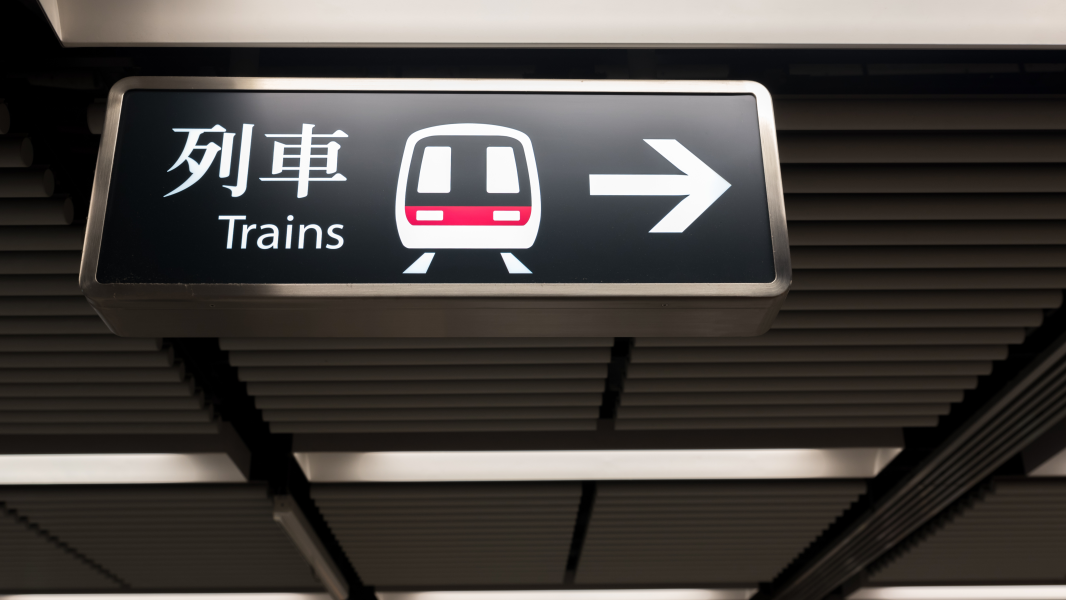
The first Octopus card I remember owning was red, plain, and almost disappointingly boring.
It did not look like a key to anything. It had none of the shine of a new toy, none of the glamour of a passport, none of the seriousness of an adult wallet. It was simply a small plastic card, given to me by my mother one summer when I was still a young child. I remember holding it with the mild confusion children reserve for objects adults insist are important. It was light, hard, practical, and visually unremarkable.
And yet, from the moment it entered my hand, Hong Kong became different.
Before that, the MTR had always involved a small performance of dependence. Someone had to buy the ticket, choose the destination, check the fare, collect that thin magnetic card, feed it into the gate, retrieve it at the other side, and make sure I did not misplace it before the journey was over. It was not difficult, exactly, but it was troublesome in the way small urban inconveniences often are. The process interrupted movement. It reminded a child that the city was not yet his to navigate.
The Octopus card removed all of that.
A tap, a beep, and the gate opened.
That was it.
For an adult, perhaps this was merely convenience. For a child, it felt like permission. Suddenly, the city seemed less guarded. The MTR gates were no longer barriers mediated by adults, coins, ticket machines, and that small magnetic card one had to remember to retrieve. They became thresholds I could pass through by myself. Even though I still travelled mostly with family, the card gave me a private sense of freedom. It made movement feel imaginable. I could go to Central, Causeway Bay, Mong Kok, Tsim Sha Tsui — anywhere on the map appeared, at least in theory, reachable from the palm of my hand.
Childhood freedom is often not real freedom. It is rehearsal. A child does not truly decide where to go, when to leave, or how late to return. But there are moments when the world briefly enlarges, and the Octopus card gave me one of those moments. It suggested that independence did not always arrive with a grand declaration. Sometimes it arrived quietly, as a piece of plastic given by one’s mother on a humid Hong Kong day.
The genius of the Octopus card was never its appearance. It was its obedience.
Hong Kong is a city that dislikes hesitation. It tolerates crowds, heat, noise, and inconvenience, but it has little patience for slowness. People move with a rhythm shaped by density and necessity. They know where to stand on escalators, when to cross, how to squeeze into a lift, how to order food without turning lunch into a philosophical exchange. The Octopus card suited this temperament perfectly. It did not ask questions. It did not require theatre. It simply worked.
What always fascinated me was how sensitive it was. You could keep it inside a thick wallet, buried between old receipts, membership cards, and folded notes, and still the reader would find it. There was something wonderfully Hong Kong about that. The card did not demand to be displayed. It did not need to be removed with ceremony. It sensed, charged, and released you back into the flow of the city. The machine did its job; you did yours. No fuss, no conversation, no delay.
Some people may think this is ordinary. In Hong Kong, it quickly became ordinary. But that is precisely the point. True convenience disappears into habit. A good system does not constantly announce its intelligence; it allows people to forget how much irritation it has removed from their lives. The Octopus card became part of the city’s muscle memory. It changed not only how people paid, but how they moved, how quickly they expected things to happen, and how little patience remained for anything less efficient.
That impatience could be funny, though not always pleasant. Anyone who has boarded a busy Hong Kong bus knows the small pressure of the queue behind you. If payment takes more than a few seconds, the atmosphere changes. No one needs to say anything at first. A pause is enough. You feel the line behind you tightening. Someone may sigh. Someone may stare. Someone may decide, with the full moral seriousness of a citizen defending public order, that you are slowing down civilisation itself.
This is Hong Kong at its most recognisable: efficient, unforgiving, faintly theatrical in its impatience. The Octopus card did not create that culture, but it fitted it so well that it seemed almost designed by the city’s collective nervous system. It allowed Hong Kong people to become even more Hong Kong — faster, sharper, less tolerant of delay, and secretly proud of it.
Over time, the card became much more than a transport pass. It entered the everyday economy of small purchases. Convenience stores, bakeries, vending machines, cafés, supermarkets, car parks, taxis — the list seemed to expand until cash began to feel oddly old-fashioned. There were days when one could attempt to survive ordinary life with only an Octopus card. It would not take you everywhere. Proper restaurants were a different matter, and life still had its exceptions. But for the practical business of moving through Hong Kong — trains, buses, snacks, drinks, small errands, sudden needs — the card was enough.
Cash became something one carried almost reluctantly, often for the purpose of topping up the very card that made cash feel unnecessary. Notes and coins were still there, of course, but they had lost some of their dignity. They seemed slower, messier, more exposed to human impatience. The Octopus card was cleaner. It made transactions brief and almost invisible.
I felt this most clearly in taxis.
I used to catch taxis often in Hong Kong, and anyone familiar with the city knows that paying a taxi driver can be its own small drama. There is the fare on the meter, the notes in your wallet, the search for coins, the question of change, and occasionally the driver’s mood, which may or may not be generous towards delay. When the driver is impatient, even counting money becomes stressful. You feel watched. You feel clumsy. You become aware of the vehicles behind, the door waiting to open, the city pressing forward.
With an Octopus card, the whole exchange was softened.
Tap.
Paid.
Finished.
It was not merely convenient. It was protective. It removed the awkwardness of fumbling, the pressure of counting, the small social discomfort of being too slow in a city that rarely forgives slowness. It turned payment into a gesture. In that sense, the Octopus card was not only a financial tool, but a lifestyle object. It allowed Hong Kong to move according to its own preferred rhythm: quick, practical, slightly impatient, and beautifully engineered for momentum.
Of course, I am writing from memory. The Hong Kong I am describing belongs mostly to the years before 2018, before my long absence from the city, before many things changed in ways both visible and difficult to name. I have not lived the most recent versions of its everyday habits. Payment systems may have evolved; phones may have absorbed functions once reserved for cards; new habits may have replaced old ones. But I suspect the Octopus card still matters, because some objects become more than technology. They become culture.
The Octopus card is one of those objects.
It is not beautiful in the conventional sense. It is not something one frames, displays, or speaks about with affection at the time. It lives in wallets, pockets, schoolbags, handbags, and desk drawers. It is scratched, topped up, forgotten, found, lent, replaced, and used without ceremony. Yet it carries a whole philosophy of urban life. It says that a city can be dense without being paralysed, complicated without being slow, crowded without losing its rhythm. It says that convenience, when designed well enough, becomes a kind of freedom.
For me, it will always return to that first red card.
I did not understand systems then. I did not think about public transport design, lifestyle infrastructure, or the cultural psychology of speed. I only knew that my mother had given me a small plastic card, and that with it the city felt suddenly less difficult. The ticket machines receded. The gates opened. The map expanded.
A child’s world rarely changes all at once. More often, it changes through small permissions.
A key placed in the hand.
A card against a reader.
A beep.
And then, almost magically, Hong Kong lets you through.
ns216.73.217.78da2


 and then Add to home screen.