

91Please respect copyright.PENANALB26taHtPl
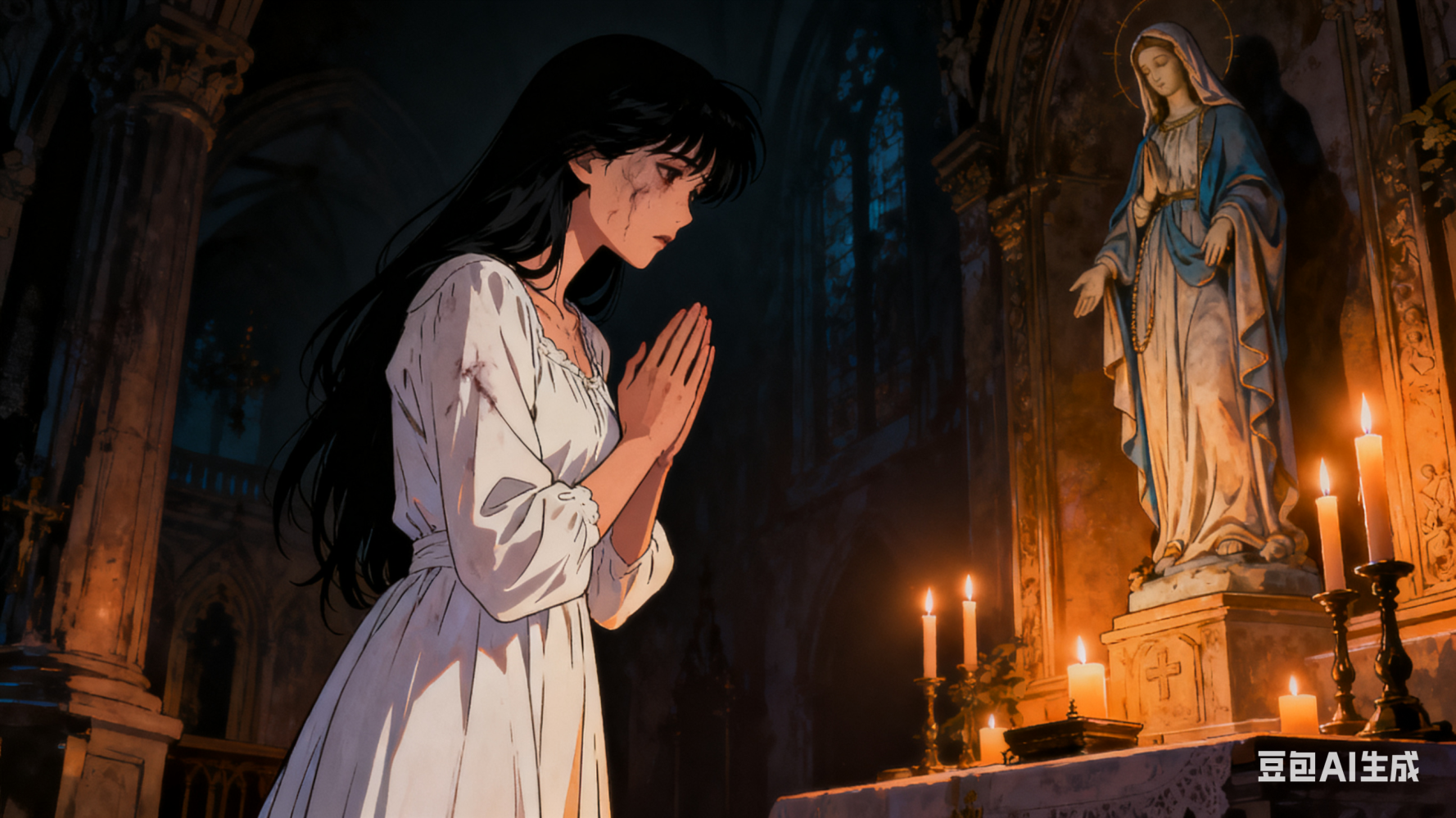
That night, like countless nights before, Wang Rong was once again praying in the chapel of the Holy Mother’s Primary School.
The statue of the Holy Mother still stood in the Romanesque pavilion, though the small pool at her feet was gone—now replaced by a ring of pure white lilies.
Wang Rong herself wore a long white dress. The elegant tailoring only accentuated her slender frame. She knelt before the statue, head bowed, hands clasped tightly, eyes shut.
“Holy Mother above, the fourth Holy Mother’s Cathedral was completed earlier this year, in the city’s most expensive central district. The Holy Mother’s High School will begin construction by the end of the year...” Wang Rong murmured, reciting her merits before the deity.
Through her mutterings, we learn that the charitable works of the Holy Mother’s Society have grown ever more substantial, serving not only the original slums but now the entire city, from infants to the elderly. Their services encompass childcare, education, elder care, healthcare, and legal aid. Under Wang Rong’s leadership, the society has become an influential charity in the city.
When her prayer ended, Wang Rong slowly opened her eyes and gazed up at the statue, tears glimmering within them.
“Holy Mother above, please grant Wang Rong a child! No—a son, I want a son! A son between me and Bai Shikun! Holy Mother! Please realize my wish soon! I know you will answer my prayer!”
Her eyes opened wide, filled with a nearly deranged fervor and panic. She seemed on the verge of tears, yet was smiling. The tug-of-war between laughter and tears twisted her features in a way that was unsettling.
Especially for forty-five-year-old Wang Rong, whose face bore not a single wrinkle and whose cheeks were still full and taut—yet her rigid facial muscles could not keep up with her exaggerated emotions, distorting her face unnaturally, evoking fear in others.
This is a common affliction among many famous women in the modern age—overindulgence in cosmetic procedures has stripped their faces of human warmth.
Wang Rong understood her own condition, so she managed her expressions strictly before the camera. During interviews, she maintained a vacuum of emotion, never showing clear expressions, let alone laughing. Facing the lens now, she could only manage a limited signature smile to avoid any grotesque collapse of her expression.
She once looked down on actresses who ruined their beauty through excessive cosmetic enhancements, but now she understood: it was not ignorance, but fear! The dread of losing youth only deepens one’s dependence on cosmetic procedures.
Now, Wang Rong was truly afraid—more terrified than ever in her life, even compared to the time when Xing Jun fell from the building, when she faced public condemnation and the collapse of her family.
But now—she was truly afraid. Afraid that all her painstaking efforts were merely a sandcastle built on shifting ground, ready to be blown away by a sudden, inexplicable gust.
This began after Wang Rong married Bai Shikun.
She was overjoyed at their wedding, feeling as if she had stepped onto the most glorious stage of her life. She believed she would soar within the elite circles and shine brilliantly.
But before long, Wang Rong hit a wall.
Bai Shikun had three sons with his first wife, all older than Wang Rong, already married with children—the eldest grandson was even older than Fang Zheng. The three sons were all outstanding, each excelling in their fields and, like their father, becoming “pillars of society.”
At the wedding, Wang Rong saw them clapping and offering their blessings.
But at the first winter solstice family dinner after she became Madam Bai, all three sons found excuses to be absent. Only a few family representatives showed up, fewer than ten, making the dinner awkward and tense.
Among the important family members present were two wives from distinguished backgrounds and Bai Shikun’s eldest grandson, attending on behalf of his parents. Their attitude toward Wang Rong was polite but distant.
The Bai family always valued tradition. On major holidays, the whole family gathered—a spectacle so lively it often made tabloid headlines.
It was clear they did not respect her new status. Unable to bear the slight, Wang Rong went to the old master to complain indirectly.
To her surprise, the old man did not side with his young wife but scolded her instead.
“I told you before—their mother’s only just passed. Yuexian’s body is barely cold, and you were in a hurry to marry in. Of course Shaozu, Shaojun, and Shaohua harbor resentment. Your insistence brought this on, so how can you now blame me or my sons?”
This was Bai Shikun’s first rebuke to her.
So, the usually assertive Wang Rong found herself like a demure daughter-in-law before the old master, head down, silently taking the blame.
She was not incapable of patience, but she had never expected that, as Bai Shikun’s new bride—at his age, with a “trophy wife”—she would not even be allowed a gentle complaint. Who could have foreseen his attitude would flip so quickly?
“Rong, I may like you, but my sons are my sons. That’s unchangeable. I don’t want to hear any more complaints from you!” With this stern warning, the old master dismissed her.
During the following Lunar New Year, the old man did not allow Wang Rong to attend family gatherings.
Because the Bai and Chen families (the latter being the family of Bai’s late wife, Chen Yuexian) were old friends, the two families always celebrated together. After the sons expressed their displeasure with Wang Rong, the old man decisively excluded her.
For the next two years, Wang Rong was not allowed to take part in Bai family activities.
Bai Shikun and his children lived in a world she could not enter. Wang Rong saw her position in the family as both absurd and laughable.
Everyone outside—members of the Holy Mother’s Society, media editors, and reporters—recognized her as “Madam Bai.”
But within the Bai family, she was invisible, like a mistress Bai Shikun could not acknowledge.
Wang Rong was bitter but powerless. Not long after that lonely New Year, she suffered a second defeat.
One day, a third-rate tabloid known for exposing celebrity scandals splashed its cover with a photo of a beautiful girl in a camisole and hot pants.
It was not unusual for such magazines to use sexy women as cover models, but the headline read: “Teenage Holy Mother Wang Rong: Peddling Flesh and Smiles on the Street,” alongside the girl’s alluring photo.
The photo, apparently taken many hot summers ago, showed a lovely, smiling teenager handing out flyers and freebies on the street, sweat glistening on her face, chest, and back.
In front of her, a middle-aged man, leering as he grabbed her gifts, was caught in the frame.
The girl wore a tight camisole and shorts so brief they nearly revealed her hips, exposing her flat stomach, smooth back, and long legs to the stifling summer heat.
To ensure nothing was missed, the magazine included close-ups of her chest and thighs, hinting at her body beneath the thin fabric.
The photo rapidly spread online, sparking public uproar and heated discussions about Wang Rong.
Her sexy photo turned what was said to be the coldest spring in the city’s history into a storm of gossip.
The magazine even produced witnesses—Wang Rong’s former classmates—who confirmed her identity and said that she, coming from poverty, worked part-time during middle school to support herself.
Wang Rong was shocked. Despite her extensive network in the media, she had no warning before the photo was published. Only someone with more power and a grudge—likely the three Bai sons—could have orchestrated this.
She could not deny the photo; she was indeed the girl.
That was the summer after her sixteenth birthday. She worked as a promoter for a small sales company. All the promoters were girls in revealing “uniforms” to attract passersby.
Her team leader, noticing her beauty, persuaded her to dress even more provocatively for five times the pay and a big bonus.
So she agreed, enduring leers and suggestive looks as she handed out gifts and promoted products, recruiting new members.
That was the hottest summer ever, and although her instinctive shyness was hard to bear, the generous pay allowed her the most prosperous vacation of her life.
Dressed like that on the street, she was discovered by a talent scout and entered the entertainment industry. Her manager molded her as a pure and innocent starlet. From then on, she never wore revealing clothes again. With solid media connections and a savvy approach, she maintained her innocent image.
She quickly became popular, caught the eye of Fang Ming, who forbade her from doing sexy roles, and soon married him, retiring in glory.
So she never regretted her decision that summer. The experience made her believe that opportunities could indeed fall from the sky—as long as you were willing to pay the price.
She never regretted it—until today.
Caught off guard, she refused media requests for comment and canceled all public appearances for a month.
Wang Rong knew this was not the ideal response, but it was the only one possible. She was no longer the “mistress” with nothing to lose after Xing Jun’s scandal. Now, as the “Holy Mother” and Madam Bai, she had too much at stake and could only retreat.
Soon, however, an even bigger celebrity scandal buried her story. After all, the photo was a shameful relic of the past, unable to compete with current scandals.
Wang Rong narrowly escaped disaster, thanks to the old master’s intervention.
Bang!
The old master slammed the magazine with Wang Rong’s photo on the floor, pounding the table and roaring, “So, you pretended to be innocent all these years, playing the saint! But deep down, you’re this kind of trash—disgusting! You’ve embarrassed me! You bitch!”
Wang Rong stayed silent. This was the second time her husband had called her a bitch. Now, she was beyond tears, her mind blank.
She did not know how long he berated her, only hearing his final, scornful warning: “This time, for my own and the Bai family’s reputation, I’ll clean up your mess. But you’d better behave—this must never happen again!”
Of course, Wang Rong did not dare tell Bai Shikun that his sons were behind it. After that, she never dared complain to the old master again.
Wang Rong later discovered that the magazine’s owner was close to Bai Shaohua, the third Bai son.
She understood Shaohua’s motives.
The old master was getting on in years and needed to plan his estate. The three brothers already competed for the vast fortune, and the sudden appearance of a much younger “stepmother” was bound to breed resentment.
If Wang Rong bore Bai’s child, it would complicate the inheritance.
This was why she desperately yearned for pregnancy.
Yet this was also her most painful vulnerability. After being scolded twice by her husband, Wang Rong knew his interest in her was rapidly fading.
She did not need a woman’s intuition to know—Bai Shikun’s disdain was written plainly on his face.
No matter how clever she was, how she pleaded, he always found excuses to avoid intimacy. Even when forced, despite Wang Rong setting aside her pride and trying everything, the old man was uninterested—sometimes even falling asleep during her passionate performances.
She knew he was seventy-five, but compared to the man she had an affair with before marriage, it was hard to believe he had declined so quickly. Now, Wang Rong almost missed the days when Bai Shikun’s roughness brought her pain.
On such humiliating nights, she would quietly leave the bed, clean herself up, and hide in the bathroom to cry softly. She had once begged Fang Ming on her knees, pitifully persuading him to sacrifice his dignity for her, but she dared not play that card with the old master.
Because seeing her own tear-stained, stiff face in the mirror, she knew it would no longer stir a man’s heart—only provoke laughter.
To bear a Bai child, Wang Rong tried everything. She set aside her pride not just in bed; on the first day of marriage, she asked Bai Shikun to let her try artificial insemination.
“Let me try. I really want to have your child...” Back in the brief honeymoon before the winter solstice, she would often snuggle in his arms and sweetly beg.
Bai Shikun gave her the chance—he too wanted to experience fatherhood in old age. But Wang Rong, in her forties, perhaps due to her constitution, failed at several attempts.
Repeated failures took a heavy toll, aging her significantly, which led her to rely on cosmetic procedures.
Wang Rong understood: once Bai Shikun died, she would be an outsider. If he lived long, she needed a child as her only foothold in the family after her looks faded and love waned. The old master’s coldness toward the “Holy Mother” extended from the bedroom to daily life.
Aside from attending public events together and feigning affection for the cameras, he never showed her kindness in private. Faced with her physical and mental exhaustion from fertility treatments, he not only showed no concern but mocked her.
He often complained her face looked more and more like a zombie—lifeless. It stung all the more coming from a seventy-five-year-old man.
Yet Wang Rong had grown numb, accustomed to enduring everything. She knew that as long as there was a glimmer of hope, she could not turn against him, could not give up, not even allow herself to feel wronged.
Still, she tried to please her husband, accelerating the relocation and reconstruction of charity buildings in the slums, desperately trying to prove her worth.
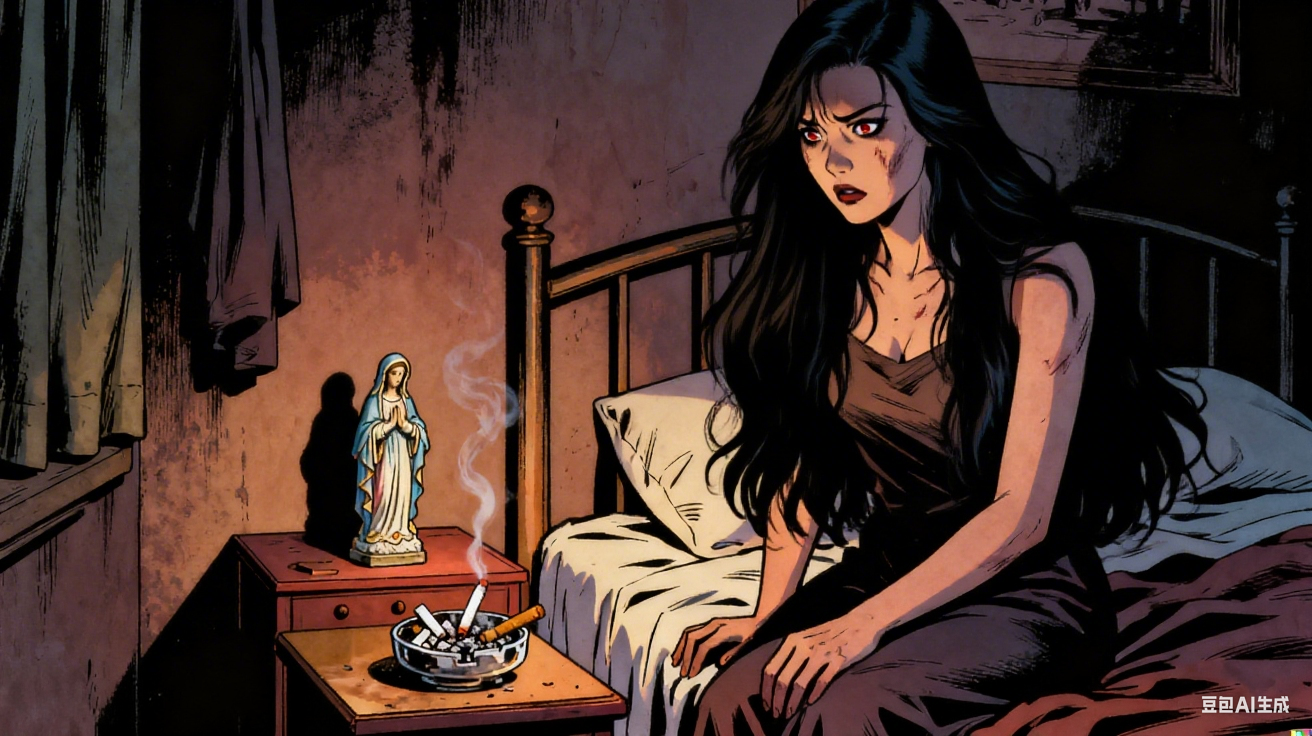
That night, Wang Rong returned to her quarters in the convent. She sat in a comfortable lounge chair, smoking cigarette after cigarette.
She felt this was the starting point of her life, so she wanted to reflect on it here.
Though born poor, Wang Rong took pride in her beauty, intelligence, and ambition, which allowed her to stand out.
Since girlhood, men had flocked around her, but few caught her interest, as she believed that any man could be hers if she tried. Fang Ming and Xing Jun were the ones she chose and pursued.
She once believed there was no adversity she could not overcome. From naive girl to housewife to career woman after Fang Ming’s business failed; after Xing Jun’s death, she hit rock bottom but seized the chance to rise again, becoming a champion of the people.
In a few short years, she married into a wealthy family with a saintly aura. Nowhere in the city was there a woman as legendary as her.
She did not think herself a social climber—she worked hard to improve herself. She was not just the “Holy Mother” but was awarded as one of Asia’s Top Ten Outstanding Women, the city’s leading female entrepreneur, recipient of civic honors, an honorary doctorate in law, and her management experience with the society was included in university textbooks. The media recognized her as the city’s number one legendary figure.
It was with such stature that she married into the Bai family.
But within a few years, she realized a cruel truth: all the halos she desperately adorned herself with meant nothing in the face of real aristocracy.
Wang Rong stared blankly at the ceiling, exhaling a ring of smoke.
She thought of the magazine cover, of her sixteen-year-old self. With a twisted laugh, she realized she was not the “Holy Mother,” not a legal goddess, nor an outstanding woman or extraordinary figure.
She took another deep drag, slowly exhaled, and watched the smoke drift up and vanish against the ceiling. She smiled absentmindedly.
I am nothing special, just a poor woman from the bottom of society, who once sold her body and dignity for a little money.
I am just a woman who struggled upward from poverty, never stopping.
Now she finally understood—this was exactly how the old master saw her. Not just him, but his sons, their wives, and their kind—all saw her the same way.
But Wang Rong was more cunning, worked harder, and was more ambitious than other poor girls. So she won more, but also lost more. That was all.
She always saw herself as someone who grows braver with each setback, never giving up. The first half of her life was a testament to that.
So after the scandal broke, she became even more active in social events, seeking exposure, believing that only by taking the initiative could she turn the tide. Wasn’t every past victory the result of her taking action?
Until she was scolded by the old master again.
“You stupid woman! Don’t you know you’re now the butt of everyone’s jokes? Just stay home! Don’t embarrass me! Or the Bai family! You’re as dumb as a pig—even a sow can give birth, but you can’t lay even an egg!”
This time, Wang Rong could not hold back and burst into tears.
“Look at that ugly face—disgusting!” The old master spat one last insult and left her.
Her confidence and pride were utterly crushed. The “everyone” he spoke of—was the upper class. No matter how hard she tried, she would never be accepted by them. From then on, she withdrew from society circles, as the old master made them off-limits, and she lost heart for the society’s work as well.
But most importantly, she had a miscarriage.
Three months ago, after many setbacks, she finally conceived. Overjoyed, she wept and prayed in thanks.
She rushed to tell the old master, who was pleased and even came home to dine with her.
But a little over a month ago, the doctor discovered the fetus was developing abnormally, and she underwent another abortion.
In these three months, she experienced a rollercoaster from hell to heaven and back.
Now, at forty-six, Wang Rong aged a decade overnight. She was no longer graceful, just withered.
She gave up on using cosmetic procedures to save her looks. Her last bit of fighting spirit was worn away by the cycle of hope and despair.
She knew the old master despised her. Since the miscarriage, Bai Shikun not only never asked about her but never saw her again.
He did not divorce her, so she was still Madam Bai. But Wang Rong understood that every day in the Bai family from now on was “garbage time” in a war she could never win.
Dawn broke, blue light filtering into the dark room. The ashtray beside her was overflowing with twisted cigarette butts. Wang Rong lay on the chair, staring coldly at the ashtray.
The dozens of butts seemed to come to life under her gaze, writhing and squeezing against each other, as if desperate to escape the cramped tin.
She felt those cigarette butts were a reflection of her kind, or her class. Her gaze grew even colder. She sneered at the ugly, worthless stubs, “Hey! I, Wang Rong, am not like you.”
With that, she took a deep drag and stubbed the cigarette out among the others.
Wang Rong got up and stood before the window. In the tranquil blue of dawn, her silhouette was delicate and graceful, yet all the beauty it suggested had nothing to do with its owner.
She drew a breath, straightened her back. It seemed that this battered woman had not yet given up.
End of Chapter 9
This story is entirely fictional. Any resemblance to real persons is purely coincidental. The author explores only the relationship between female destiny and faith and does not target any real individuals.
Copyright Notice:91Please respect copyright.PENANArXI5A6Kv1D
The Legend of Wang Rong: How the Earthly Holy Mother Persona Was Forged91Please respect copyright.PENANA3kf3G9C6lO
(Bilibili Title: Wang Rong’s Story: From Disgraced Starlet to Legal Goddess)91Please respect copyright.PENANAthfk8XCYI3
Chapter 9: The Legend of the Holy Mother91Please respect copyright.PENANAo9pUhXtA03
Original work by Jing Xixian (Vampire L). All rights reserved.
No reproduction, adaptation, distribution, translation, or commercial use without written consent.91Please respect copyright.PENANAj3Y9p1mfBN
© Jing Xixian (Vampire L), All rights reserved.


 and then Add to home screen.