

Wang Rong understood: it was all over. She could no longer become pregnant, so only two endings awaited her:
First, if Old Bai did not divorce her, she would continue to wear the title of “Madam Bai” and play the Holy Mother in public, but in the Bai family, she would be an invisible prisoner. When Bai Shikun died, she would have nothing to do with the Bai family, and his three sons would drive her out. By then, her Holy Mother halo would surely collapse.
Second, if Old Bai found her, the Madam Bai who was now less useful than a piece of furniture, to be an eyesore and divorced her, all the funding and connections that the Bai family had invested in the Holy Mother Society would be taken back in one fell swoop. Her halo would shatter even faster.
Was there a third way out? Yes.
Wang Rong admitted it: this was a battle she could not win. She knew she was no match for that tiny circle of true social elites. Rather than wait to lose—wait to be cleared out by the Bai family, whether by Old Bai or the three sons—why not escape on her own terms?
Wang Rong decided, before anyone realized, from this moment on, she would quietly transfer the assets of the Holy Mother Society overseas. Combined with the wealth she had accumulated over the years, she would have more than enough for a life of luxury abroad.
Once everything was arranged, she would disappear for good, never returning to this small city.
Yes, Wang Rong no longer wanted to be the Holy Mother. She no longer wanted to be a socialite.
Now, she found herself returning to that hot summer at sixteen, back to the girl who wore sexy clothes and flaunted herself on the street—Wang Rong who only wanted money.
The sky grew brighter, a beam of morning sunlight piercing through the window, the blue darkness fading as the room became suffused with a warm golden glow.
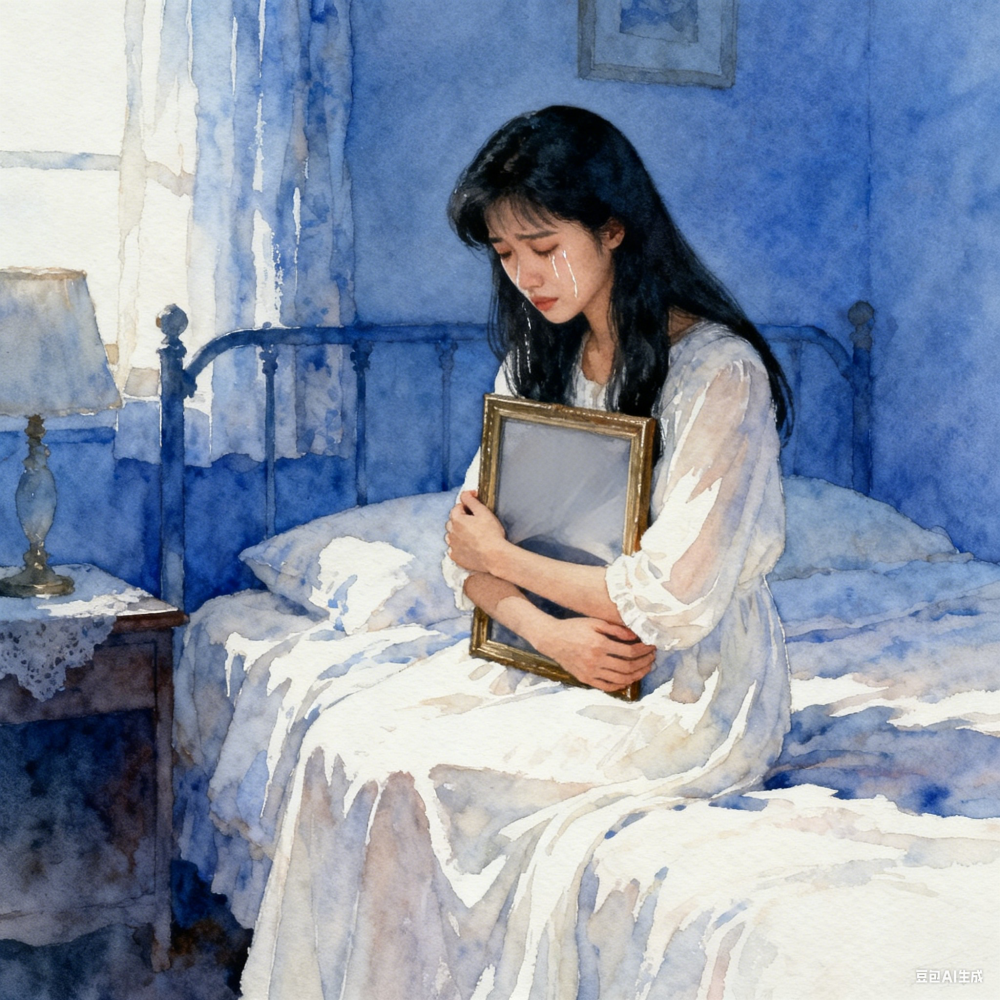
Wang Rong sat at the bedside, picked up the photo frame on the nightstand. In the frame was a picture of her and her young son, Fang Zheng.
The photo had been taken by Fang Ming. In it, Wang Rong was twenty-five, Fang Zheng only five. She held her son on her lap on the grass, both smiling genuinely in the sunlight.
She gazed at her younger self in the photo, tears already falling onto it.
The person in that photo radiated youth and vitality, her beautiful face showing a hint of a young wife’s charm, her eyes pure and happy.
Yes, Wang Rong remembered, back then Fang Ming’s career was at its peak, and she felt that as long as he loved her and their adorable son was in her arms, she wanted nothing more.
Looking at the silly, smiling child in the photo, Wang Rong realized how long it had been since she saw Fang Zheng, and even longer since she last contacted her son. All this time, in her pursuit of a second son, she had paid no attention to her eldest son’s life—or even his survival.
Thinking of her son inevitably brought up memories of her ex-husband, Fang Ming; after all, father and son looked so much alike.
I wonder how Ming is doing now...?
Only now did she truly miss Fang Ming. She realized he was the only man who had ever genuinely loved her and given her his heart, even if their souls never truly connected.
Wang Rong had long lost contact with her mother.
Her mother had attended her wedding to Bai Shikun, but even now, Wang Rong could not understand why her mother had not been as elated as she’d imagined, her expression gloomy throughout. The usually materialistic Mrs. Wang had shown no particular happiness at her daughter’s marriage into a wealthy family.
After Wang Rong married Fang Ming, he had treated her mother well, giving her enough money for a comfortable old age.
Not long after Wang Rong joined the Bai family, her mother left the city, writing to say she had moved to a small Southeast Asian city known as the “Pearl of the Orient,” and would settle there permanently. Wang Rong wrote to the return address, but received no reply. Their mother-daughter bond ended there.
Only now did Wang Rong realize that, aside from her son, she had no other family in the world.
“Ming... I’m sorry... I’m so sorry...” At this, Wang Rong clutched the photo and wept bitterly.
After her experience with Bai Shikun, Wang Rong finally understood how well Fang Ming had treated her. She also realized how cruelly she had trampled and hurt him back then, all to preserve herself.
No... I must find them again!
Determination flashed in her tear-filled eyes.
She hadn’t forgotten: her last communication with Fang Ming was a phone call to settle the divorce. She remembered how cold and final his tone had been.
She knew Fang Ming had every reason to hate her, but it didn’t matter—he’d always been soft-hearted beneath his tough exterior.
This summer, she would represent the city on a business trip to San Francisco, one of the perks of being “Madam Bai.”
She thought she could take the opportunity to visit her son and inquire about Fang Ming—especially his love life.
Wang Rong figured: Ming was no longer young, nor rich, and given how stubborn he was, he couldn’t have found someone new so quickly. In any case, she decided to start with her son.
So, the Earthly Holy Mother, Wang Rong, set her plan for a complete retreat.
Before leaving, she glanced at the small cabinet in the corner of the room, where a foot-tall statue of the Holy Mother stood.
Over the years, Wang Rong’s story had become city legend. Tales of her childhood wish at the Holy Mother’s feet—to marry a rich man, a wish that came true—spread everywhere. In recent years, more and more women had joined the Holy Mother Society, each with dreams like young Wang Rong’s.
And when the Society’s star, Wang Rong, married into a wealthy family, it only strengthened these beliefs. In truth, this was one of Wang Rong’s publicity strategies; she had quietly spread the rumors herself.
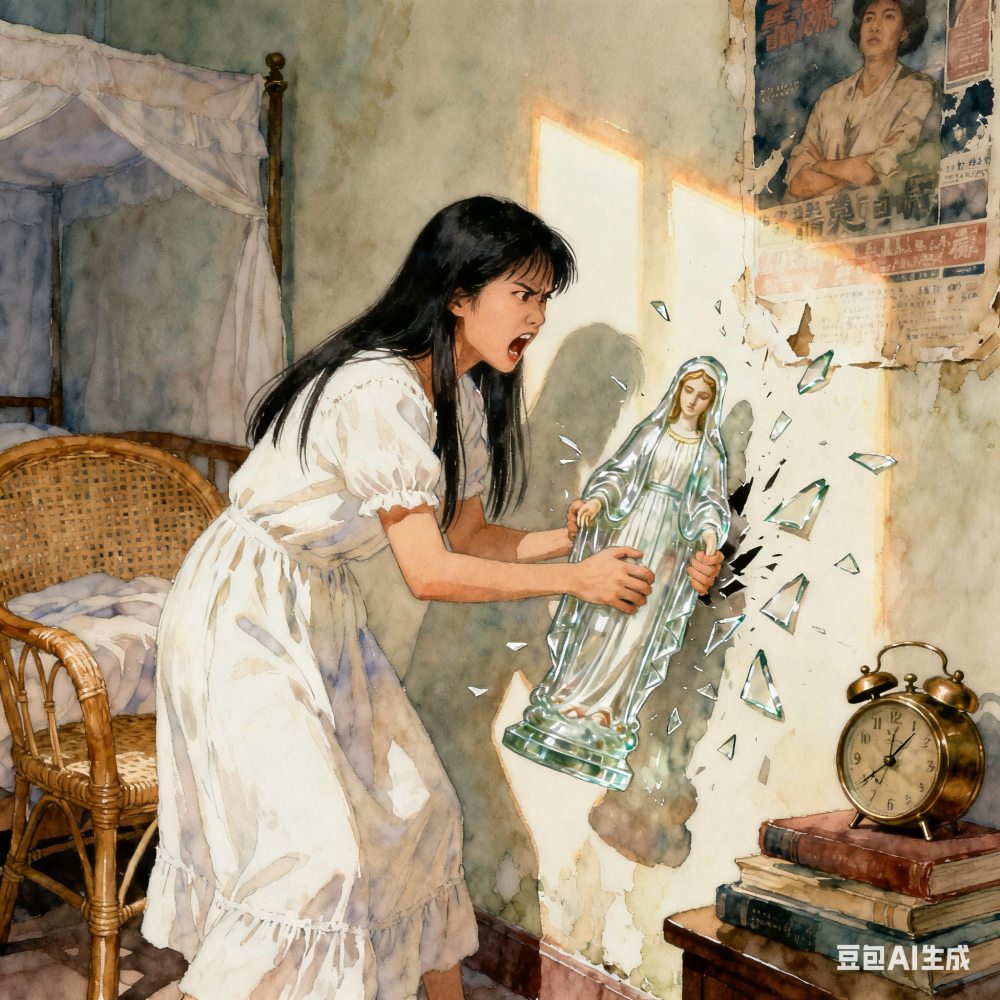
Thinking of these women, and of her years of devotion to the Society, Wang Rong strode over, looked down at the Holy Mother statue with a face full of contempt and resentment, spat at it, then turned proudly away and closed the door behind her.
The Holy Mother, thus insulted, still stood in the morning light, hands clasped, a loving smile on her face.
On Christmas Eve in San Francisco, the city was steeped in holiday spirit.
Early in the morning, Xia Yu had prepared all the festive food. Xia Lixian and Fang Zheng would be home the next day, and she had readied a lavish Christmas dinner. At noon, Fang Ming and Xia Yu rushed downtown to shop at Macy’s, returning with a carload of goods. In the evening, the couple went to a high-end Chinese restaurant in Chinatown.
“Impossible!” Xia Yu suddenly exclaimed, staring at her phone.
Fang Ming was curious; his wife rarely made a fuss. “What’s impossible?”
Xia Yu looked at Fang Ming with a strange expression and pushed her phone over.
She had just read an online news article:
“Super-rich tycoon Bai Shikun of the Eastern City sorrowfully announces that his wife, Bai Wang Rong, recently passed away from acute heart attack at the age of forty-six.”
“Bai Shikun also stated he will assume the role of next president of the Holy Mother Society, continuing his wife’s charitable legacy. Reports say the Society’s assets exceed a billion.”
The couple exchanged glances, both recalling the nightmare: “Fang Ming dies of heart disease, Wang Rong weeps for her husband.” A strange feeling and doubt rose in their hearts—had Fang Ming’s dream become reality, in another version?
A new believer entered the chapel at the Holy Mother’s Primary School.
The Romanesque pavilion stood in the center, and an elderly man with silver hair, immaculately dressed, sat on a wooden bench before the statue, head bowed, hands folded, praying.
The hall’s black-and-white marble tiles formed a checkerboard beneath his seat.
The sea of white lilies that once surrounded the statue had been replaced by blood-red roses, encircling the Holy Mother.
Except for Bai Shikun, the vast chapel was empty.
The Holy Mother’s Chapel at the primary school used to be open to the public from morning to noon on holidays. Many women in the city had heard the urban legend that prayers for love here were especially efficacious, so every holiday, women of all ages would crowd the chapel.
But after Wang Rong’s death, Bai Shikun announced the chapel would no longer be open, not even to Society members without management approval.
This caused dissatisfaction among members and the public, but the Society’s management pleaded for understanding, saying the chapel was the sacred place of connection between Bai and his beloved wife, and that they planned to build chapels in every district for public and member prayers.
Still, many women complained, because they heard no other chapel was as “miraculous” as the one at the primary school.
Bai Shikun murmured, “Holy Mother, thank you for fulfilling my wish and bringing Wang Rong back to heaven. Thank you for blessing me and Long’er.”
He looked up at the statue, a deep, subtle smile passing over his face.
Who was Long’er? She was a magazine model who debuted only two years earlier, at seventeen.
A friend had introduced Long’er to Bai at a party. At first glance, he was astounded—even at his age and with all his wealth, he had never met a beauty like her.
“Her parents gave her a good name—Long’er. Like Little Dragon Girl!” his friend joked.
Indeed, Long’er was ethereal, otherworldly, untouched by earthly dust.
“Hello, Mr. Bai,” Long’er greeted politely, shyly.
Bai never forgot how she looked in her pure white silk off-shoulder gown, the youthful figure, her timid upward glance, not daring to meet his eyes.
Those bright eyes, trembling lashes, the faint blush on her cheeks...
Too adorable! Far too adorable!
The instant he saw her, a flame ignited in his heart—spring had come at last.
Unlimited delight.
That night, with tears in her eyes, Long’er let him take her virginity.
Bai placed Long’er in a luxurious villa in the suburbs—not the one he once used with Wang Rong. He did not want her to model anymore; she became his full-time secret lover.
From youth to old age, Bai Shikun never lacked for women, changing them as often as clothes.
As the only son, he had married socialite Chen Yuexian in his early twenties, a union arranged by their powerful families. Lady Bai had been dignified in youth, but Bai never loved her. Once he had fulfilled his duty with three sons, they slept in separate rooms.
From the start, Lady Bai ignored her husband’s affairs, as long as he maintained her dignity and avoided public scandal.
Bai had always been attractive; women flocked to him without inducement. As he aged, no woman failed to submit to his wealth and power.
He was generous—women rarely complained, nor dared—given his influence in the city. Half the media was funded by the Bai family, the other half by his friends and family. Editors would rather dig up dirt on minor celebrities than provoke anyone from the Bai family.
This was how Bai Shikun maintained the image of a “faithful husband.”
Suddenly, Bai frowned, thinking of Wang Rong.
He agreed she was an extraordinary woman. But what amazed him was how quickly he could come to detest a woman he once liked.
At a social event, Wang Rong had introduced herself. Bai, of course, knew her—hailed as the “Last Guardian Angel,” the new president of the Holy Mother Society, at the height of her fame.
He genuinely admired her intelligence and capability. To conquer such a woman, to make her submit to his wealth and power, brought him unprecedented excitement—a woman glowing with a holy aura, yet to him, not even worth the prostitutes of her old neighborhood.
For this reason, he was particularly rough with Wang Rong.
He also noticed her Society president status; his redevelopment plans for the slums targeted the Society’s properties, making her identity doubly useful.
But he kept his intentions hidden, never asking her for help. He knew a woman like Wang Rong would offer herself up without being asked.
Yet the more she tried to prove her worth, the more he disliked her—for her cunning, ambition, and calculation. These were the very women he despised.
And when Wang Rong tried to appear pure and obedient, adoring him, it was simply nauseating!
Even worse, she acted her part but expected him to play along as the doting older husband—a grave insult to his intelligence!
Bai could never tolerate being insulted by a woman. Thus, that cold winter solstice gathering was a tacitly coordinated attack by father and sons.
Still, in the end, he was the one insulted. That photo—the magazine cover of sixteen-year-old Wang Rong “peddling flesh on the street”—was a slap in the face.
From then on, his hatred for Wang Rong grew. Again and again, he had to humiliate her in bed and in words, just to balance his heart.
He allowed her to try artificial insemination, not believing a woman in her forties could conceive—but he enjoyed watching her hysteria and desperate struggle.
When Wang Rong miscarried, he was relieved. For just before she told him the good news, Long’er had revealed she was pregnant—and that was definitely his child.
When Long’er told him, Bai held her in his arms and felt true joy for the first time in years. He almost divorced Wang Rong on the spot, but her social reputation meant it would harm him and the family.
He recalled the “miracle” of the Holy Mother Society—the urban legend that Wang Rong’s childhood wish to marry a rich man had come true.
One restless night, he went to the chapel, placed a white flower before the statue, and, with a hint of mockery, said, “Holy Mother, if you really have such power, grant my wish.” Then he left.
Three days later, he woke in Long’er’s bed to news that Wang Rong had been found dead before the statue—sudden heart failure, confirmed at the scene.
Thinking of this, Bai stood and approached the statue, saying, “Rest assured, as long as I, Bai Shikun, am alive, I will develop the Holy Mother Society into the largest, most influential religious organization in Asia—no, the world!”
Bai smiled. Hard to imagine such a wily old man could look so genuinely happy—maybe for the first time in his life.
Yuexian was gone, Wang Rong was gone. Now it was just him and Long’er...
He had decided to register a secret marriage abroad with the girl who looked even younger than her age. When Wang Rong’s death faded from memory, he’d make her his third wife in public.
He knew his three sons would not like it, but his decisions had never been swayed by anyone. Everything about this pure girl brought a wild spark to his withered soul.
At seventy-six, Bai Shikun looked forward to a free, unrestrained life with Long’er, living every day in hope for their new life—so much so that he seemed to have grown younger since Wang Rong’s death.
He smiled at the statue. “So, bless me with a long life. Bless me and Long’er with everlasting happiness. And bless our child—may he be healthy, intelligent, and grow up quickly.”
Thinking of the child soon to be born, Bai finally understood what happiness felt like.
He straightened his back and strode out of the chapel.
Bang!
The heavy doors closed, sealing the Holy Mother from the mortal world.
After Bai left, the empty chapel was left with only the Holy Mother.
Whether at the corner of the schoolyard or in the grand chapel, she stood alone, waiting for the next believer to pray and make a wish.
Yet it seemed, for a long time to come, Bai Shikun would be the only one to pray.
And the Holy Mother, forever bowing, hands folded, wore a loving smile.
But, just as the doors closed, perhaps under the reflection of light or candle, a flash seemed to glint in her eyes—then disappeared.
End of Chapter Ten
This story is entirely fictional. Any resemblance to real persons is purely coincidental. The author explores only the relationship between female destiny and faith and does not target any real individuals.
Copyright Notice:
The Legend of Wang Rong: How the Earthly Holy Mother Persona Was Forged
Chapter Ten: The Holy Mother Plan
Original work by Jing Xixian (Vampire L). All rights reserved. No reproduction, adaptation, distribution, translation, or commercial use without written consent.
© Jing Xixian (Vampire L), All rights reserved.
ns216.73.216.67da2

 and then Add to home screen.