

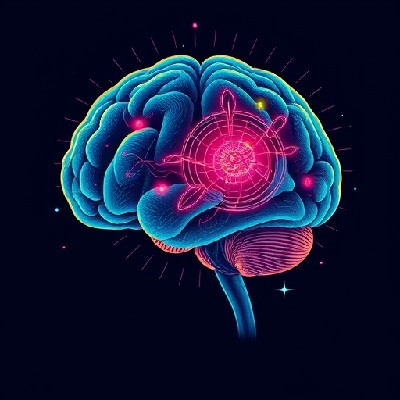
Author's Note : All the cases that I am discussing are related to scientific observations about the existance of consciousness after clinically dead declared patients. What will happen to a person in actual life after death is only the matter of divine power and nobody knows.16Please respect copyright.PENANAxgrlFGCnYG
Consciousness, once thought to be solely the product of the brain, may actually have another source beyond the physical body. Research from neurologists and thousands of patient case files tell us that consciousness may not be a property of merely the brain. There are several reason for this claim, including:
-The brain may actually be a conduit for consciousness rather than the creator,
-the ability for humans to report awareness in the absence of a functioning brain,
and
-new understandings of the brain's connection to awareness.
1. The Brain as Filter, Not Factory
For years, the prevailing thought on the relationship between the brain and consciousness has been that the brain somehow creates it. However, neurologists like Dr. Bruce Greyson and Dr. Alex Gómez-Marín believe that it is more likely the brain merely allows us to access the consciousness already present within us. Much like light, consciousness cannot be seen in its purest form- we must pass it through a medium (in this case, the brain) in order to witness its effects. The brain acts as a prism, refracting consciousness and limiting the scope of what we can experience. The removal of this medium would result in an explosion of consciousness beyond anything we've known. This theory also explains the phenomena of people who, upon entering a deep medical coma, report memories that were inaccessible to them before their procedure. According to Greyson and Dr. Gómez-Marín, this could be explained by the cessation of brain activity during the coma, removing the barrier to consciousness that our brains typically provide. If this is the case, it would be no surprise if patients who have suffered a temporary medical death later report seeing things that they otherwise couldn't perceive.
2. Cases of Consciousness Beyond the Brain
Neurologists who study the connection between the brain and consciousness have been observing and evaluating patients who experience a sudden cardiac or respiratory arrest. Patients often report feeling especially coherent during the resuscitation process. Most notably, they are frequently able to recall specific details about what happened during the incident, even if they were clinically dead for part of the time. Neurologist Greyson has noted patterns among such patients, describing them as being "exceptionally lucid" and possessing a "rich recollection" of the event. These patients can even name the specific phrase used by the doctor who revived them, despite having no physical ability to hear at the time of the procedure. After the incident, most of these patients return to normal lives with no apparent mental defects, making it difficult to deny their accounts as delusions. Another strange report from the world of medicine concerns those who say they could hear during what should have been a deeply sedated state. Neurologists have found that many people are aware of their surroundings during a general anesthetic, but feel unable to communicate this due to their compromised mental state. There is clearly something strange happening in the brains of these patients, whose consciousness seems disconnected from their physical state in ways that current science cannot easily explain.
3. New Approaches Toward Understanding Death
With new approaches toward reviving patients with severe brain injuries, doctors' understanding of what constitutes clinically dead has changed dramatically over recent years. Doctors are realizing that this state is more nuanced and gradual than previously understood, allowing for patients to survive with minimal brain function. These realizations have spurred doctors to take a closer look at consciousness and its relationship with the brain. Though most researchers still agree that the brain somehow generates consciousness, these case files are helping us understand the mechanics of this process. By better comprehending this mechanism, we can gain new insight into what exactly consciousness is, why it matters, and how we might prolong or enhance it. The study of consciousness is clearly one of the most fascinating topics in all of science, and our understanding of it is constantly evolving.
Conclusion
Consciousness is a topic of great interest to many scientists, but the prevailing thought on its origin has long favored the materialist view, which holds that the brain controls and generates it. However, the emergence of reports about consciousness beyond the brain has led many to reevaluate this perspective. Neurologist Greyson has theorized that the connection between the brain and consciousness may be more like that of light and optics, claiming that our awareness exists on a much broader spectrum that the brain merely restricts. He and his colleagues continue to explore this possibility, aided by an expanding knowledge of the ways the brain can affect consciousness. With further study of the ways the mind interacts with the body, our understanding of the relationship will grow, and new ideas about consciousness will appear.
ns216.73.216.179da2

 and then Add to home screen.