

141Please respect copyright.PENANAlzmWM2s5qU
 141Please respect copyright.PENANAI1ySnYCsqV
My name is Saskia De Witte, and this is the story of my life, told in my own words.
I was born in a small town in the Netherlands, one of those places where the wind always carries the scent of damp fields and the distant sea, and where everyone knows everyone else’s business. My childhood was marked by deep unhappiness. From the age of ten, our old wooden house with the large garden was never a refuge for me. It was a cold and oppressive prison.
My mother, Els De Witte, had long, often tangled blonde hair and light blue eyes that seemed lost in a world of their own. She would talk to herself for hours, arguing animatedly with invisible voices, and when rage overtook her, she would pour cruel insults on me: calling me useless, stupid, a burden she didn’t know what to do with. My father, Pieter De Witte, with his dark blond hair and green eyes, tried to escape her outbursts by drinking too much. He never hit me, but his emotional absence was almost worse. My brother Lars, a few years older than me, had curly blond hair and the same green eyes as our father. He was selfish and focused only on himself; to him, I was little more than a shadow in the house.
At thirteen, I started working at the bakery Taarten en Kussen, owned by Mr. Hendrik van Dijk. There I found my first real breath of air. The workshop smelled of butter, cinnamon, freshly baked stroopwafels, fragrant apple pie, and crispy Dutch bread. I worked after school and on weekends, often full shifts. The colleagues and owners quickly became more of a family to me than my blood relatives.
At sixteen, I left school for good and began working seven days a week, with double shifts from four in the morning until eight in the evening. It was physically exhausting, but every hour spent in that warm bakery meant one hour less in the house I hated so much.
I had already been sleeping in the woods more often than in the old wooden house. I had a small tent that I hid well among the trees, about twenty minutes by bicycle from town. The woods were close enough for me to get to work, but far enough to muffle my mother’s screams and delirious monologues. By the age of ten, I was practically homeless. I spent almost every night at my best friend Anna Visser’s house.
Anna had straight brown hair and kind hazel eyes. Her mother, Mrs. Greta Visser, was the closest thing I ever had to a real mother. Greta paid for everything I needed for school — clothes, books, notebooks — without ever asking too many questions. In the evenings, I did my homework at their kitchen table while she hummed old Dutch folk songs. Anna and I would stay up late whispering secrets and dreams. Those years with them were the only time in my childhood when I truly felt safe.
Then came the hardest blow. Greta fell ill with brain cancer. She fought bravely, but died when I was sixteen. Anna, now alone, was sent to a foster family. I cried for weeks, devastated by the pain. The very same day they took Anna away, I went to a sports store and bought the best one-person tent available, along with all the necessary equipment to survive in the woods: a technical sleeping bag, a camping stove, a water filter, a knife, and a flashlight. That night, I moved permanently among the trees.
I continued working at Taarten en Kussen. My mother started showing up at the shop more and more often. With her disheveled hair and glassy eyes, she humiliated me in front of customers, shouting things like, “Look at my useless daughter playing at being a baker.” Regular customers began to feel afraid. I spoke with Henry van Dijk, the owner’s father, a tall, thin man with gray hair, gentle but firm. He moved me to the basement, where the bread and pastries were prepared. Access required a badge. After numerous unpleasant incidents, my mother was permanently banned from the shop.
The legal battle with my family lasted months. One day I called the police and told them everything: the mental abuse, my mother’s schizophrenia, the constant fear I lived in. She had been diagnosed years earlier but had always refused treatment. With the bakery’s support, I finally obtained a restraining order.
At eighteen, I decided to disappear completely. I left no message. I deleted all my social media accounts, then burned my old laptop and phone in a hole dug in the woods. From that moment on, I became a ghost. I continued working, but lived completely off-grid in my tent. In winter, with the silent permission of Hendrik and his father, I sometimes slept in the back room of the bakery. I arrived an hour before the others to shower and wash my few clothes. I ate exclusively at work: lunch and dinner were free for staff.
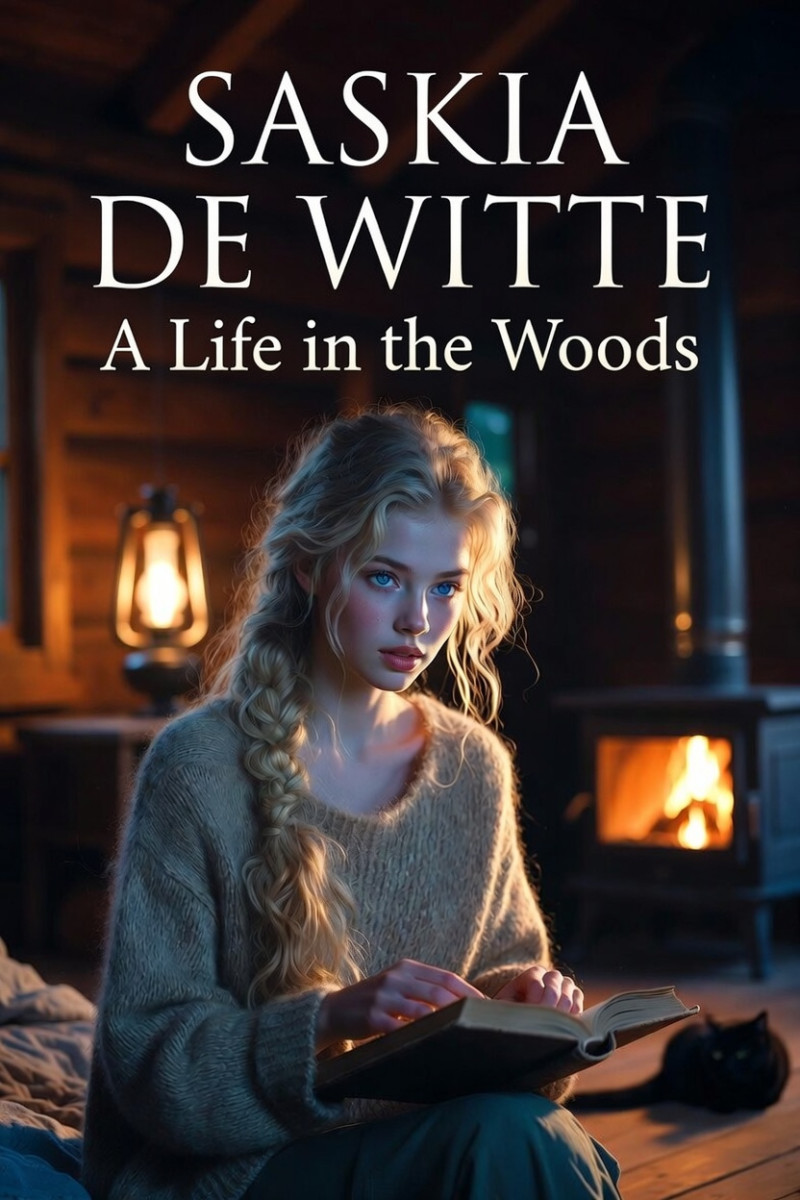
The years passed with a steady rhythm of dough to knead, hot ovens, bicycle rides through the forest, and the deep silence of nature. I saved every possible cent. After ten years of that hard but free life, I finally had enough money. With the help of Jeroen Bakker, a quiet and trusted colleague, I bought a small plot of land hidden in the woods, and together we built a simple wooden cabin. No electricity. No running water. Just one main room, a wood stove, a rainwater collection system, and an outdoor toilet. It was all I needed.
My family tried to find me a few times, but I was now unreachable. One day I saw my brother Lars in town with a woman and two small children. He still had curly blond hair, just a bit longer. My father had divorced my mother and tried to get close again, saying he finally wanted to take care of us. I felt nothing. I coldly told him to leave and never come back. I never saw him again. My mother ended up in a psychiatric hospital. The old wooden house burned down completely some years later, caused by squatters who left a candle burning on a windy night. When I heard about it, I felt only great relief.
I was not alone. I had the beautiful memories of Anna and Greta. I had my friends from the bakery, Lotte Meijer and Emma de Groot. In our small town, people still greeted each other. I went to church alone for the six o’clock mass, while my family, when I was little, attended the eleven o’clock service. Those moments of silence and incense gave me a deep inner peace.
As the decades passed, I became indispensable to the bakery. When Hendrik decided to retire, he offered to sell it to me. I was in my thirties. I accepted with emotion. I kept the original name and tradition: only authentic Dutch products. The basement remained my personal kingdom of flour, yeast, and dedication.
I never married. I never had a relationship. After everything I had been through, I didn’t want anyone that close to my heart. I did have two loyal companions, though: two black cats that had adopted me in the woods. I named them Nacht and Schaduw. They kept me company during the long winter evenings while I read books by oil lamp, tended my small vegetable garden, and picked berries.
At fifty, two teenagers walked into the shop — a boy and a girl. They had the typical De Witte features: blond hair, fair skin, slender build. The boy had curly hair like Lars. They introduced themselves as my brother’s children and asked for a job. I looked at them calmly and replied:
“I’m sorry, I don’t hire family.”
I felt neither anger nor sadness, only the same serene distance I had built over all those years.
My life continued serene and full. I woke before dawn, cycled through the woods to the bakery, worked with passion, and returned to my small cabin. In the evenings I sat outside, listening to the wind in the trees, the crackle of the fire, and the calls of the owls. I was truly, deeply happy.
One night, when I was nearly eighty, I fell asleep as usual in my simple wooden bed. My two cats curled up at my feet. I had lived exactly as I wanted: free, self-sufficient, and at peace. I died in my sleep, silently, just as I had lived most of my adult life.
They found me a few days later, when I didn’t show up for work. The town gave me a simple and quiet funeral. Some old colleagues and acquaintances attended. No family came. My cabin and the bakery passed to Anna Visser, as I had written in my will. Even though we hadn’t been in touch for years, she and her mother had given me everything during the worst moments of my life. She had been raised by a wealthy foster family. She took over and became the new owner — someone who had earned it through loyalty and respect.
And this, I believe, was the most beautiful ending I could have wished for. A girl who chose the woods and her own hard work instead of a broken family, and who found peace right there.
THE END
ns216.73.216.254da2

 and then Add to home screen.