

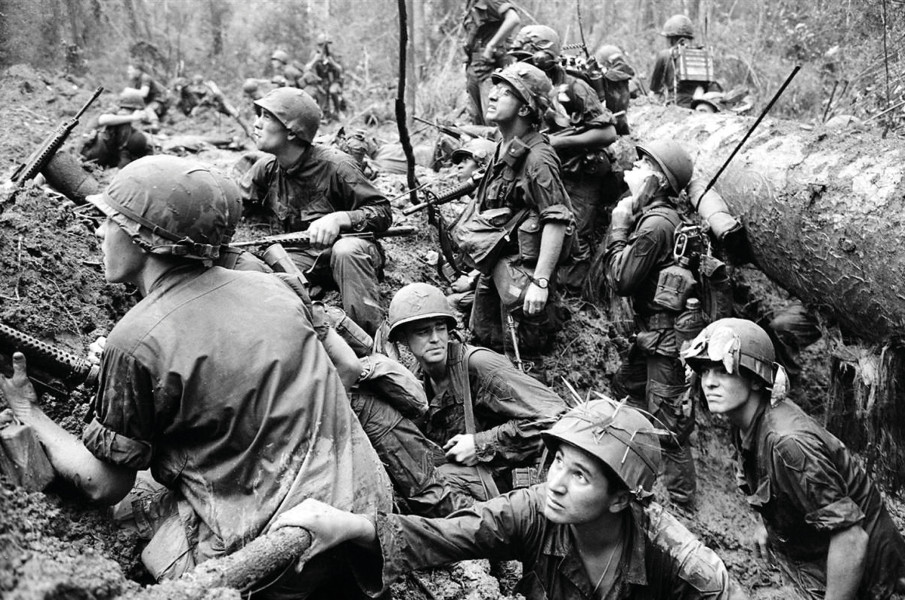
The year 1968 was a big year in both the United States and Vietnam. Robert F. Kennedy was shot, the Tet Offensive occurred, but one of the biggest events in all of the Vietnam War was the My Lai Massacre. The My Lai Massacre was a historic tragedy that caused people to lose faith in the U.S. and left people to believe that the entire time, the U.S. had been lying to them.
The U.S. planned and led the attack. The My Lai Massacre occurred in March of 1968. During it, American soldiers brutally murdered between 200 and 500 unarmed individuals. (My Lai Massacre) Causes of the My Lai Massacre varied from all sorts of things going on at the time.
One of the causes of the My Lai Massacre was a fear of complete Communist control, a fear that the war would never end. (Road to My Lai) U.S. soldiers wanted the war to be over and wanted peace to return to Vietnam. They believed that if they attacked the enemy, South Vietnam, with full force, they would startle them and make them surrender. If South Vietnam surrendered, the war would be over, and soldiers could return home. The U.S. knew what they were doing; they were just following orders, but they weren’t expecting their attack to turn into nothing but a historic tragedy. (The My Lai Massacre)
Another big event that eventually led to the My Lai Massacre was the Tet Offensive, which occurred on January 30, 1968. (Charlie Company, 18) The Tet Offensive was a huge military campaign of the Vietnam War, launched by forces of the Viet Cong and the North Vietnamese People’s Army of Vietnam, against the South Vietnamese Army of the Republic and the United States. The Tet Offensive was a series of surprise attacks, and it wasn’t considered a victory for either the United States or South Vietnam.
During Tet, more than 100 cities and towns in Vietnam were attacked. (Tet Offensive) The casualties were enormous. In all, 14,000 civilians were killed, and 24,000 were wounded. The attack caused the U.S. to understand just how unbearable the war was, and they decided to put together a plan that would hopefully strip the Vietnamese of soldiers and lead to the war coming to an end. This eventually led to the My Lai Massacre.
Soon after Tet, the U.S. sent the Charlie Company into Vietnam, and they started doing adequate training to get them ready for the massacre. While training, soldiers were given many military skills. Constant training, however, led to some confusion throughout Vietnam. Civilians didn’t know why it looked like U.S. soldiers were training really hard. They were completely unaware of their plan to hopefully end the war. If it wasn’t for the Tet Offensive, then the My Lai Massacre would’ve never happened.
The My Lai Massacre officially started at 7:40 A.M. when platoons landed on the battle zone and went in for the attack. During the massacre, the U.S. was expecting the Vietnamese to put up a good fight: (The My Lai Massacre, 20)
“We expected strong VC resistance.” (Dennis Conti of Charlie Company, 20)
“We were really expecting trouble. We were all psyched up.” (Dennis Conti of Charlie Conti, 20)
However, the U.S. didn’t get a fight. Soldiers fired into My Lai, killing civilians of all sorts, men, women, even children, but the enemy never attacked back.
“The only Vietnamese they saw was one man in a rice paddy, who might have been waving or might have been farming.” (The My Lai Massacre, 20)
Failure for the enemy to show up only led to even more confusion, but this time not only from civilians but also the U.S. Every time they had been attacked before, the Viet Cong had attacked back, but at the My Lai Massacre, they didn’t. U.S. troops moved in very quickly, one after another, and they continued to attack the town. No Viet Cong were killed during the My Lai Massacre. It was just men, women, children, and the elderly, innocent, unarmed people.
The whole reason why the United States attacked was that they were only following their orders, and they were told to kill everyone in the village, in fear that some civilians may be either Viet Cong in disguise or spies hiding there. In the end, the My Lai Massacre had a significant negative impact on the U.S.
After the My Lai Massacre, there were almost no casualties on the Charlie Company side, except one who was suffering from a self-inflicted wound. (Aftermath, 22) All the deaths were on the Vietnamese civilian side, none on the Viet Cong side. It is unknown where they were at the time of the massacre. It took a year for news about it to actually spread and reach the U.S.
A credibility gap sucked the U.S. in like a black hole. All around the world, when people heard of the massacre, they couldn’t believe that it was the U.S. that had done it. People became mad at them and started calling them out for attacking My Lai and killing hundreds of innocent people. There was a loss of support for the war and a loss of trust in the U.S. government.
Not everybody was mad at the U.S., though. A military spokesman called out and explained the massacre was an isolated event and that the U.S.’s Charlie Company should not be held accountable. (Aftermath, 24) They were basically forced into a conflict they never really wanted, but they went anyway.
There were lots of investigations and trials held after the My Lai Massacre, and only one man, William Calley, was found guilty by the time things calmed down. (Aftermath, 24)
“… found guilty, convicted of the premeditated murder of twenty-two civilians and sentenced to life in prison in hard labor.” (Aftermath, 24)
A couple of years after the event, in 1970, things started winding down for the U.S. soldiers still in Vietnam. In 1973, they left and let the rest of the war be dealt with by North and South Vietnam, for their participation in it wasn’t really necessary.
The My Lai Massacre was a very confusing time in U.S. history. They trained for so long to get ready for what they thought would be a successful fight against the Viet Cong, but in the end, they were the ones who looked bad. Confusion went up another level when they started the attack and realized that the Viet Cong weren’t even participating, and that they had really just killed a bunch of innocent souls. Surely the U.S. felt a little bad about the whole thing, but then again, they were only following orders. They were expecting a victory, a victory that would terrify the enemy and hopefully end the war, but nope. The war continued for another seven years until 1975, when it officially ended.
After the Tet Offensive, the U.S. wanted to ensure that by the next major battle, there would be a crucial victory, but, really, there never was.
ns216.73.216.67da2

 and then Add to home screen.