

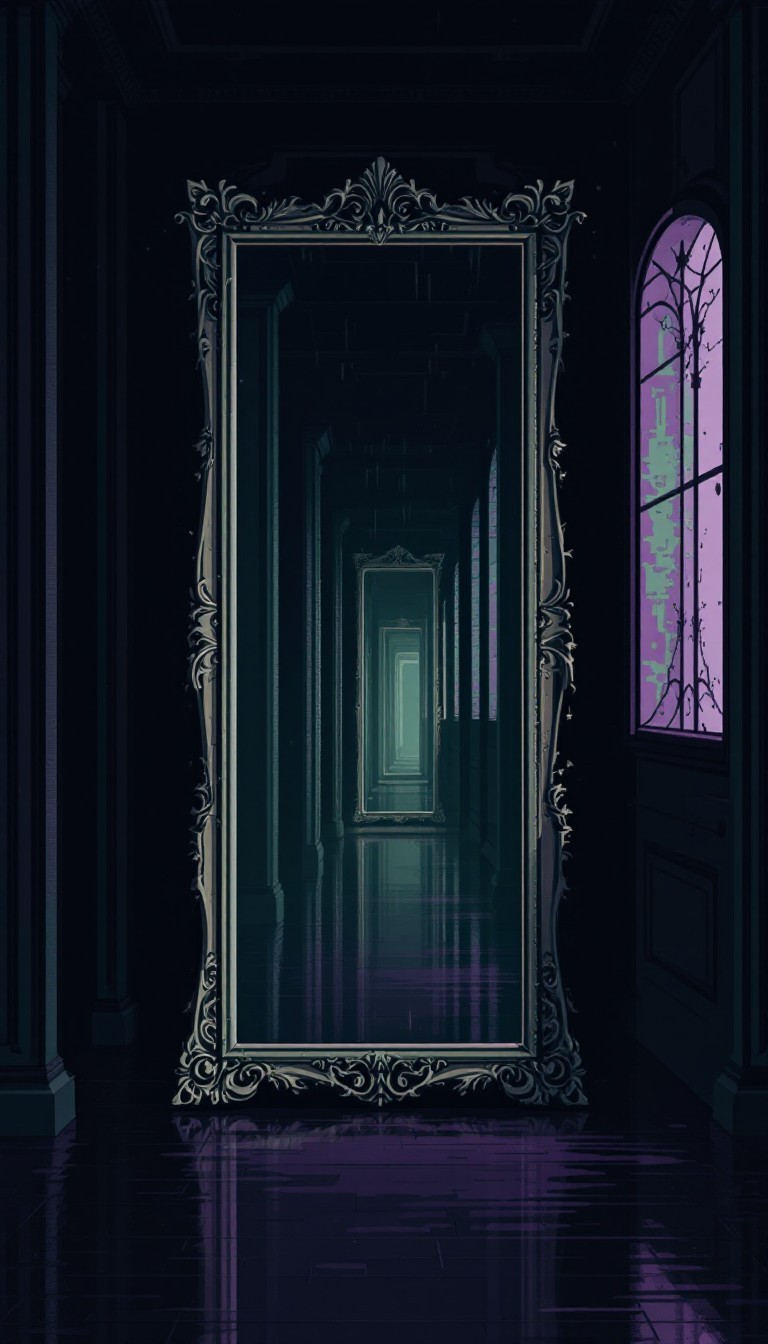
Entry XXII: Reflection
The shadows of the previous week still lingered heavily in my mind as I stared out the window that Saturday morning. The warmth of the sunlight crawling over the rooftops of the town didn't do much to lift my spirit. My mind was clouded with thoughts—anxieties, doubts, fears. The tension from the proposed reelection still gnawed at me, and I couldn't help but replay the scene over and over again: Alvis raising his voice, the accusatory stares, the unspoken agreement that the class should cave in to the will of the loudest voices. And Jillian, who once smiled at me in meetings, now standing on the same side as Alvis.
It's funny, I thought, how leadership turns from respect to resentment in just one misunderstanding. I knew not all of my classmates were snakes. I knew some of them still saw me as their mayor, as someone who cared. But in the back of my mind, I felt betrayed by the few who turned their backs so easily. Still, what hurt the most wasn't the reelection itself—it was the feeling that my efforts, my sleepless nights responding to inquiries, my sacrifices, and my countless mayoral duties were being erased, just like that.
Yet fate, in its strange way, bought me time. With the week fully booked and no official vacancy in schedule, the reelection hadn't been pushed through. It was a small mercy, but even small mercies can mean a lot to someone whose heart is burdened.
Saturday came. ROTC was canceled once again—our trainers had a guest visiting at the Camp, and while that would have usually excited me for a longer rest, my heart still felt heavy. When I woke up, the first thing I did was walk to the mirror, slowly, quietly. I stood there, my eyes meeting my own reflection. I didn't look tired—but I felt empty.
"Who am I if I will not be the Class Mayor anymore?"
I whispered it to myself, trying to find any sign in the reflection that might hold an answer. But there was none.
The mirror showed only a confused boy trying to cling to something that may be gone soon.
With no answer yet to comfort me, I quietly went downstairs and stepped outside. I had a compilation to submit at the COE faculty, and even though it was a weekend, duty still called. As I walked through the corridors of the university, each step felt like I was walking deeper into my thoughts. The breeze barely brushed past my shoulders, and the sun wasn't as warm anymore—it felt like a pale light against my skin.
I was supposed to head straight to the University lagoon. But something made me stop. Out of the corner of my eye, I noticed the ecumenical chapel, nestled calmly at the heart of the university grounds. Its doors were half open, and its silence seemed to call out to me. Drawn by a feeling I couldn't quite name, I walked toward it.
Inside, kneeling by the front pew, was someone familiar—Maxwell Alexander Cabalen, the treasurer of EDSA. He didn't see me at first, his head bowed in prayer, lips moving in silent devotion. I didn't dare interrupt. The quiet in the chapel was different—it wasn't empty; it was comforting. Soothing.
When Maxwell finally rose, he turned and spotted me standing by the door. A smile crossed his face, and he motioned me to come closer. I hesitated, then stepped inside.
He had heard about what happened, and he didn't need many words to express what he felt. "Being a mayor is a hassle," he admitted. "And sometimes, people will never see how heavy the crown is until they wear it themselves."
His voice wasn't judgmental—it was kind, almost brotherly. He said it was okay to let go. That maybe, in letting go, I would find peace. "You've done enough," he said. "More than enough."
As he spoke, he walked toward the altar to fix a few things. That's when I saw it—the long Roland piano, standing beside the altar, still plugged in. I couldn't resist.
"Can I?" I asked.
"Go ahead," he smiled.
I walked slowly toward the piano, laid my fingers gently on the keys, and closed my eyes. Then, I let my soul speak.
The notes that came out were from a place deep inside—melodramatic, aching, filled with memories. I played the story of my past: the friendzones, the rejections, the loneliness of being the one always trying but not always seen. My fingers danced over the keys, painting images of the days I doubted myself, the moments I questioned my worth, and the nights I wished someone would just understand.
The melody turned brighter slowly, hinting at growth, at hope. The people who stayed, the achievements I worked hard for, and the resilience I built through every hardship. I ended the piece with a soft chord that lingered in the air like a sigh of relief.
When I opened my eyes, Maxwell was clapping. He looked genuinely moved.
"That... was astonishing," he said. "You've got something powerful in you, Finnian. Have you ever considered joining the Ecumenical Chapel group?"
I smiled and nodded. It felt right.
He promised to recommend me to Sir Lenny, the head of the chapel group. Before I left, I knelt before the altar. I closed my eyes and offered a silent prayer—not to be restored as mayor, but to find clarity. I kissed the crucifix gently, and then left.
As I walked home, a feeling of calm washed over me. I messaged my friend Adam, who also served as a class mayor at San Pablo Colleges, and told him everything. He, too, had experienced similar situations. His words echoed Maxwell's: "Leadership is not about titles. It's about service, and once you've given that, no one can take it away from you. However, you did what you did bro, and if they don't want anymore, then so be it. They need to try being Class Mayor so they will understand the hard ships. Just let bygones be bygones bro. "
When I got home, I went straight to my mother. I asked her the question that had haunted me since the start of the week.
"If I'm not the Class Mayor anymore... would you be disappointed in me?"
She looked at me, her eyes warm with love, and shook her head. "Mayor or not, I'm proud of you. I see how hard you try. That's more than enough."
Tears prickled at the corners of my eyes. I hugged her tight, like I used to when I was a child.
Later that evening, I stood once again in front of the mirror. I stared at myself—not searching for an answer this time, but waiting for it to come naturally.
And it did.
I saw myself—not as a mayor, not as a title. I saw my past self: the shy, introverted boy from Inner City High, who loved writing, who crafted things with his hands, who played music for no one but himself. I saw the same boy who struggled in silence but kept going anyway. I saw my academic self—the boy who learned, failed, improved, and succeeded.
And I saw someone new.
A writer. A musician. A servant. A faithful believer.
Then, as my eyes met my own, I whispered,
"I am Finnian Theodore Liwayway. Mayor or not, I am still my own being."
And for the first time in days, I felt whole again.
187Please respect copyright.PENANAjZWP4H4x8F


 and then Add to home screen.