

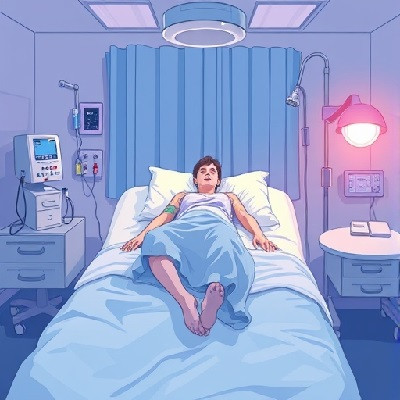
Suppose that a patient's heart stops pumping, he has almost zero brain activity, and doctors officially declare him dead. Then, wthin a lapse of time, the patient starts showing his vitals and comes back to life. The real surprise comes when he can perfectly describe the entire scene upon waking.
Didn’t understand ? Proceed further.
The terminology is defined as Veridical Perception, where the clinically dead person describes the whole scene with 100% accuracy during a near-death experience (NDE).
So, what about those who say that oxygen-deprived brains hallucinate? Do they have an answer to the question of the accuracy of the mind's perception?
This phenomenon occurs when a clinically dead person truly observes real events, such as conversations between nearby people or objects that he could not have perceived with normal senses. All these accounts are not just wishful thinking to justify something; they have been independently cross-checked and proven by medical staff members or witnesses, leaving scientific assumptions far behind.
Core Elements of Veridical Perception
When patients are brought back from the brink, their memories typically contain three highly specific types of information:
Spatial Awareness:
A subject tells about the layout of the room very precisely, pin point exactly where the specific medical equipment was rolled, or identifies the place where his family members were waiting for his revival down the hall.
Auditory Precision:
Recalling verbal talks, tough medical jargon, and the exact time when they were pronounced dead (that really happened with my physiotherapist who had a cardiac arrest).
Unexpected Visuals:
In this type of case, the subject can tell about things that are entirely out of range from their physical line of sight, such as dust on top of hospital cabinets, the serial numbers of hidden equipment, or a pigeon sitting on an exterior window ledge.
What Was Revealed in Clinical Trials
To differentiate myth from reality, experts have conducted case studies such as the following:
The AWARE Study of 2014
Led by Dr. Sam Parnia, this largest experiment monitored approximately 2, 000 cardiac arrest cases from different hospitals. This case study was documented successfully and proved evidence of veridical perception. While the brain of a person was entirely exhausted due to lack of oxygen, the patient accurately detailed a 3 minute window of his own resuscitation process, correctly telling about the specific audio signals of the defibrillator that was used and, quite surprisingly, the exact physical movements of a physician.
The AWARE II Study in the year 2023
By increasing the technical ante, the next study primarily focused on real-time brain monitoring with electroencephalogram (EEG) during active resuscitation. The top most researchers made some astonishing discoveries, which concluded that up to 40% cases of almost dying brains experienced sudden, highly accurate patterns of the electrical activities that inolved alpha, beta, and gamma waves up to one hour after cardiac arrest. This proved that rather than collapsing, the brain makes high electrical impulses and the theory that oxygen deprived brain makes hallucinations due to lack of these impulses was proved wrong.
If you like my article then kindly comment and like thanks.


 and then Add to home screen.