

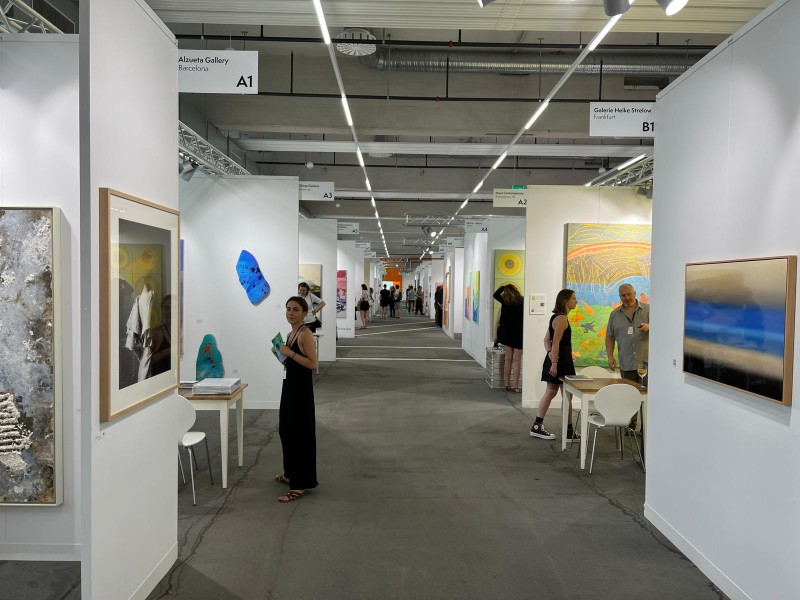
Walk into any traditional gallery today, and you'll see the same setup that's existed for centuries: beautiful artworks accompanied by small, static paper labels containing basic information. But what if those simple labels could do so much more? What if they could instantly verify authenticity, tell rich stories, and connect visitors to a world of interactive content with just a tap of their phone?
The future of museum technology isn't just arriving—it's already transforming how galleries, museums, and art fairs present their collections. Smart gallery labels are revolutionizing the art world, moving far beyond simple information displays to become powerful tools for authentication, engagement, and trust-building.
The Costly Reality of Traditional Gallery Labels
Before diving into the smart revolution, let's examine what galleries are dealing with today. Recent industry surveys reveal that 66% of museums print 200+ labels per year, with 33% exceeding 500+ labels annually. Each label costs an average of $70-$100, including design and labor costs—and that's before considering the expense of reprints due to errors or last-minute changes.
For a mid-sized gallery hosting monthly exhibitions, this translates to thousands of dollars annually just for basic paper labels. Add the labor costs for installation, the inflexibility of single-language displays, and the complete lack of authentication capabilities, and it becomes clear why the industry is ready for change.
But cost is just the beginning of the problem. Traditional labels offer no way to verify authenticity, track provenance, or engage digitally native visitors who expect interactive experiences. In an era where art forgeries and authentication disputes make headlines regularly, static paper labels feel increasingly inadequate.
The Smart Revolution: Beyond Information to Authentication
Smart gallery labels represent a fundamental shift from passive information display to active authentication and engagement tools. Unlike traditional digital signage solutions that simply replace paper with screens, truly smart labels integrate blockchain technology, mobile connectivity, and interactive features to solve real problems facing galleries and collectors.
Over 70% of museums plan to integrate AI and AR technologies into their visitor experiences by 2025, signaling a massive industry transformation. However, the most innovative galleries are going beyond basic digital displays to implement authentication-focused smart labeling systems.
The Technology Behind Tomorrow's Gallery Experience
Modern smart gallery labels utilize several cutting-edge technologies working in harmony:
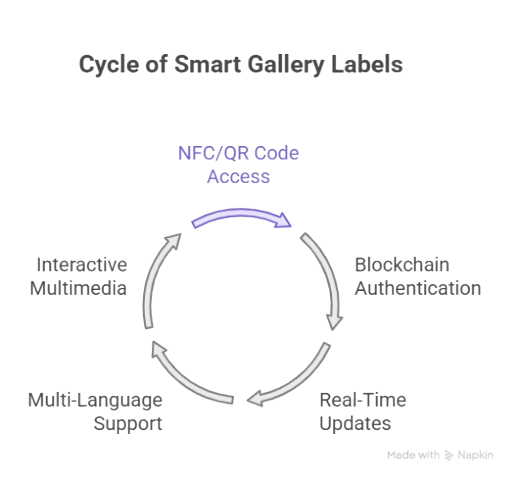
- NFC and QR Code Integration: Visitors can tap their smartphones on NFC-enabled labels or scan QR codes to instantly access detailed information about each artwork. This mobile-first approach meets visitors where they are and on the devices they use the most: their mobile phones.334Please respect copyright.PENANAH5u7DQdO7Q
334Please respect copyright.PENANASrQ6UIPddc - Blockchain Authentication: Each label connects to blockchain-verified records that prove authenticity, track ownership history, and maintain immutable provenance records. This isn't just about displaying information; it's about providing proof. For example, understanding what provenance in painting means and why it matters highlights how crucial authentication has become in today’s art world.334Please respect copyright.PENANAEPy4VHycSN
334Please respect copyright.PENANAZdualETlFm - Real-Time Content Management: Gallery staff can update label information instantly through cloud-based systems, eliminating reprinting costs and allowing for dynamic content changes during exhibitions.334Please respect copyright.PENANAM1ROde66Iz
334Please respect copyright.PENANALbpz8Pymnd - Multi-Language and Accessibility Features: Smart labels can display content in multiple languages and offer adjustable font sizes, making exhibitions more inclusive for diverse audiences.334Please respect copyright.PENANAW5d78gPd12
334Please respect copyright.PENANAM4kH7hpyRr - Interactive Multimedia: Beyond basic text, smart labels can link to video interviews with artists, 3D artwork rotations and augmented reality (AR), conservation details, and related artworks, creating rich, immersive experiences.334Please respect copyright.PENANAxFMYxFwJNa
334Please respect copyright.PENANAlEzNaDJWRH
Real-World Implementation and Success Stories
Forward-thinking institutions are already seeing remarkable results from smart label implementations. The Museum of Fine Art, Houston, was among the first museums in the world to try electronic paper labels, installing twenty displays as part of their 2016 CORE Exhibition.
Meanwhile, the National Museum of Singapore has successfully integrated AR experiences into its exhibits, allowing visitors to see historical scenes recreated in real-time as they walk through galleries. This seamless integration of physical and digital experiences represents the direction the entire industry is heading.
FAL technology, on the other hand, goes further by combining authenticity, ownership, and visitor engagement through customized interactive Mobile Fine Art Experiences™. These experiences inform, engage, and captivate audiences using their own mobile phones—no separate audio guides required. As explored in Inside the Art World’s Digital Revolution, this integration marks a true turning point for how art is experienced.
The potential speaks for itself: increased visitor engagement, reduced operational costs, enhanced accessibility, and most importantly for commercial galleries—improved trust and confidence among potential buyers.
The Authentication Revolution
Here's where smart gallery labels become truly revolutionary: they solve the art world's biggest challenge—authenticity verification. While traditional labels simply describe what visitors are seeing, smart labels can prove it.
Consider this scenario: A collector walks through a gallery, smartphone in hand. They approach an intriguing artwork and tap their phone on the label. Instantly, they access:
- Blockchain-verified proof of authenticity
- Complete ownership and provenance history
- Artist verification and certification
- Conservation records and condition reports
- Market history and comparable sales
- Interactive artist interviews and creation process videos
This isn't just information—it's confidence. It's the difference between hoping an artwork is authentic and knowing it is. For galleries looking to provide this level of verification, understanding how minting and authentication work is essential.
Transforming the Gallery Business Model
Smart labels aren't just changing visitor experiences; they're transforming how galleries operate and generate revenue. Galleries and art fairs implementing blockchain technology may enjoy improvements in client trust, reduced authentication disputes, and enhanced ability to attract serious collectors.
.png) 334Please respect copyright.PENANAcTER49V5s5
334Please respect copyright.PENANAcTER49V5s5
For gallery owners, smart labels offer:
- Operational Efficiency: No more reprinting costs, instant updates, and centralized content management across multiple exhibitions.
- Enhanced Credibility: Galleries using authentication-focused smart labels signal to collectors that they prioritize transparency and trust.
- Data Insights: Understanding which artworks generate the most engagement, visitor flow patterns, and collector interests.
- Competitive Advantage: Offering services that traditional galleries cannot match—instant authenticity verification and rich interactive experiences.
Insights into what makes an art gallery successful reveal how trust, innovation, and technology adoption can be defining factors in standing out within today’s competitive art market.
Overcoming Implementation Challenges
While the benefits are compelling, galleries considering smart label implementation should address several key considerations:
- Technology Integration
- Staff Training
- Visitor Education
- Privacy and Security
- Cost-Benefit Analysis
Platforms like The Fine Art Ledger make this process highly cost-efficient by combining blockchain-backed authentication with mobile-first visitor engagement.
The Seamless Experience Revolution
The concept of "Invisible Experiences" envisions technology anticipating user needs without being obtrusive—and this perfectly describes the future of smart gallery labels. The best implementations fade into the background, enhancing the art viewing experience without overwhelming it.
Imagine walking through a gallery where labels automatically detect your language preference, adjust content based on your interests, and seamlessly guide you to related artworks. This isn't science fiction—it's the natural evolution of museum technology that leading institutions are already implementing.
Looking Ahead: The Next Evolution
The future of smart gallery labels extends beyond current capabilities. Emerging trends include:
- Predictive Personalization
- Augmented Reality Integration
- Social Integration
- Advanced Analytics
As discussed in Fine Art Libraries in the Digital Age, the fusion of digital infrastructure with art management is shaping the future of how collectors and institutions interact with artworks, both physically and virtually.
The Trust Factor: Why Authentication Matters
In an art market where a single authentication dispute can cost millions, smart labels that provide blockchain-verified proof represent more than convenience—they represent security.
For collectors, smart labels offer peace of mind that has never before been possible. The ability to instantly verify authenticity, access complete provenance records, and connect with an artwork’s digital certificate creates a level of transparency the art world has long needed.
Implementation Best Practices
Galleries ready to embrace smart label technology should consider these best practices:
- Start Small
- Work with a Platform like The Fine Art Ledger
- Prioritize Mobile Experience
- Focus on Content Quality
- Train Staff Thoroughly
- Measure Success
Conclusion: The Future is Now
Smart gallery labels represent more than technological advancement—they represent a fundamental reimagining of how galleries build trust, engage visitors, and verify authenticity. As the art world continues to grapple with authentication challenges and evolving visitor expectations, galleries that embrace smart label technology will be positioned to thrive in the digital age.
The future of museum technology isn't coming—it's here. The question for gallery owners isn't whether smart labels will become standard, but whether they'll be leaders or followers in this transformation.
For visitors, collectors, and art enthusiasts, smart gallery labels promise a future where every artwork tells its complete story, where authenticity is instantly verifiable, and where the line between physical and digital art experiences disappears entirely.
The revolution in gallery technology has begun. The galleries that embrace it today will define the art world of tomorrow.
ns216.73.216.75da2


 and then Add to home screen.